How Soil Compaction Around Trees Affects Tree Roots
Most tree problems that homeowners notice, thinning leaves, slow growth, a canopy that just doesn’t look right, get blamed on what’s visible above ground. But a surprising number of these issues actually start below the surface, in soil that’s been quietly compacted for years without anyone realizing it.
Soil compaction is one of the most common, and most overlooked, causes of tree decline in cities like Chicago. It doesn’t happen overnight, and it rarely announces itself clearly. A driveway poured a decade ago, years of foot traffic across the same patch of lawn, or a construction project next door can all quietly compress the soil a tree’s roots depend on, long before the tree shows any visible sign of stress.
This guide explains exactly what soil compaction is, how it damages roots, and what ISA Certified Arborists do to diagnose and treat it, including Air Spade decompaction, one of the more effective tools available for restoring root zone health without further damaging the roots already there.
How does soil compaction affect trees? Soil compaction reduces air pockets in the soil, limiting oxygen, water infiltration, and root growth. As a result, trees may experience slow growth, canopy thinning, leaf discoloration, branch dieback, and increased susceptibility to drought, pests, and disease. Professional soil decompaction and root care can help improve growing conditions in many cases, though effectiveness depends on severity, soil type, and overall tree condition.
1. What Is Soil Compaction?
Soil is made up of solid particles, sand, silt, and clay, along with pore spaces between those particles that hold air and water. Healthy soil has a good balance of solid material and pore space, which gives roots room to grow and gives water and oxygen a path to reach them.
Compaction happens when pressure, from equipment, vehicles, foot traffic, or even the weight of a structure, presses those soil particles closer together, collapsing the pore spaces between them. The soil becomes denser and harder, with far less room for air, water, or root growth than it had before.
Once compacted, soil doesn’t just become firmer to walk on. It fundamentally changes how water moves through it and how easily roots can physically push through it to expand, which is exactly why compaction is such a significant problem for tree health, even though it’s essentially invisible from the surface.
2. Why Healthy Soil Matters
Tree roots need more than just physical space. They need ongoing access to a few specific resources that healthy, uncompacted soil provides:
- Oxygen availability. Roots respire, using oxygen and releasing carbon dioxide, just like other living tissue. Pore space in healthy soil is what allows that oxygen exchange to happen.
- Water infiltration. Loose soil lets rainfall and irrigation soak in and reach the root zone, rather than running off the surface or pooling on top.
- Nutrient uptake. Roots absorb nutrients dissolved in soil water, a process that depends on healthy water movement through the soil profile.
- Beneficial microorganisms. Healthy soil supports a living ecosystem of fungi and bacteria that help make nutrients available to roots, many of which need oxygen to survive.
- Root expansion. Roots need soft enough soil to physically grow through as the tree matures and its root system expands outward and downward.
Compaction interferes with every one of these functions simultaneously, which is part of why its effects on tree health can be so significant even when the compaction itself seems minor.
3. What Causes Soil Compaction Around Trees?
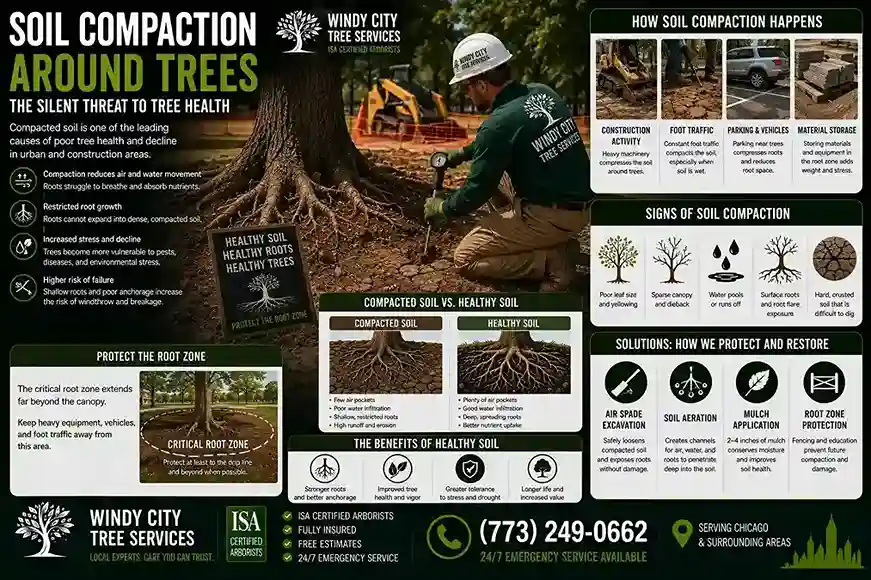
Compaction usually builds up gradually from repeated pressure rather than a single dramatic event. Common sources include:
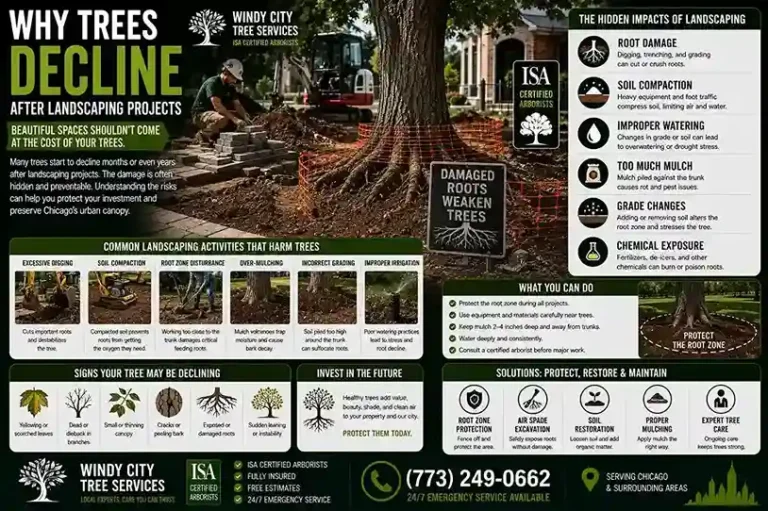
- Construction. Heavy machinery, material staging, and general site activity are among the most damaging sources of compaction, often affecting a much wider area than the actual construction footprint.
- Heavy equipment. Even occasional use of heavy machinery near a root zone can cause lasting compaction.
- Vehicle traffic. Cars or trucks parked or driven over a root zone, even infrequently, compress soil significantly over time.
- Frequent foot traffic. A well-worn path across a lawn, repeated over months or years, gradually compacts the soil beneath it.
- Lawn maintenance. Repeated mowing, especially with heavier equipment, contributes to gradual surface compaction.
- Driveways and sidewalks. Pavement installation compacts the soil beneath and around it, sometimes affecting root zones well beyond the paved area itself.
- Material storage. Stacking soil, mulch, equipment, or other heavy materials on top of a root zone adds sustained pressure.
- Urban development generally. The cumulative effect of decades of construction, traffic, and land use changes is part of why compaction is such a persistent issue in cities specifically.
4. Signs of Soil Compaction
Compaction symptoms show up in the tree, not the soil itself, which is part of why it’s so often missed. Watch for:
- A sparse, thinning canopy compared to previous years
- Smaller than normal leaves
- Yellowing leaves (chlorosis), often across the whole canopy
- Browning leaf edges or premature leaf drop
- Noticeably slow growth or minimal new shoot development
- Dead branches, sometimes concentrated in one section of the canopy
- Surface roots becoming more visible, sometimes a sign roots are struggling to grow downward into compacted soil
- Standing water after rain, since compacted soil drains poorly
- Noticeably hard soil that resists a shovel or screwdriver
Here’s the important caveat: every one of these symptoms can also result from drought, disease, pests, or other site issues entirely unrelated to soil compaction. That overlap is exactly why professional diagnosis matters. Guessing at the cause can lead to the wrong treatment, wasting time while the tree continues to decline.
5. How Soil Compaction Damages Tree Roots
The damage from compaction happens in a fairly direct chain of cause and effect:
- Oxygen deficiency. Reduced pore space means less oxygen reaches root tissue, directly impairing root respiration and function.
- Reduced root growth. Roots simply can’t push through soil that’s too dense, limiting how far and how effectively the root system can expand.
- Water stress. Poor infiltration means roots may not receive adequate water even during normal rainfall, effectively creating drought conditions in soil that isn’t actually dry.
- Nutrient deficiencies. Restricted water movement limits how well roots can access and absorb available nutrients.
- Root death. Sustained oxygen deprivation can kill root tissue outright, particularly the fine feeder roots responsible for most water and nutrient uptake.
- Increased disease susceptibility. A stressed root system is measurably less able to defend against root rot pathogens and other opportunistic diseases.
None of this happens overnight. Compaction-related decline is typically a slow, cumulative process, which is both the bad news (it’s easy to miss early on) and the good news (there’s usually a meaningful window to intervene before permanent damage sets in).
6. Trees Most Affected by Soil Compaction
Sensitivity to compacted soil varies by species, though nearly all trees are affected to some degree. Common Chicago species worth watching:
- Oak. Generally sensitive to root disturbance and compaction, particularly mature specimens with established root systems.
- Maple, especially shallow-rooted varieties, which can be notably affected by surface compaction.
- Elm. Reasonably tolerant compared to some species, but still affected by severe or prolonged compaction.
- Birch, known for being particularly sensitive to root stress of many kinds, including compaction.
- Ash, though many Chicago ash trees face bigger threats from emerald ash borer currently.
- Honey locust, generally considered more urban-tolerant, though not immune to severe compaction.
- Pine, which can be sensitive to compaction-related drainage issues in particular.
- Spruce, similarly sensitive to poor drainage resulting from compacted soil.
Species tolerance is only part of the picture, though. Site conditions, soil type, existing tree health, and the severity of compaction all interact to determine actual risk for any specific tree.
7. How Arborists Diagnose Soil Compaction
A proper diagnosis goes beyond simply noticing hard soil. A thorough evaluation typically includes:
- Tree health inspection. A full canopy, trunk, and visible root assessment to establish overall condition.
- Root zone evaluation. Examining the area around the tree for signs consistent with compaction, including soil hardness and surface drainage patterns.
- Soil testing. Assessing soil density, structure, and sometimes composition to confirm compaction and rule out other soil-related issues.
- Air Spade investigation. Using compressed air to expose root structure directly, revealing root density, health, and how roots are responding to the surrounding soil.
- Root collar inspection. Checking the base of the tree for girdling roots or other issues that can compound compaction-related stress.
- Site history review. Understanding past construction, grading changes, or land use near the tree helps explain when and how compaction likely developed.
- Construction assessment. For trees near recent or ongoing construction, evaluating the specific activities and equipment involved helps target the diagnosis.
8. Air Spade Soil Decompaction
An Air Spade uses compressed air, not a shovel or mechanical tiller, to loosen and excavate soil around tree roots. This distinction matters enormously for tree health, since traditional digging tools can sever or damage the very roots you’re trying to help.
The general process:
- Compressed air technology breaks up compacted soil without cutting through roots in the process, since air flows around solid root structures rather than through them.
- Soil loosening restores pore space in the root zone, improving oxygen and water access where it’s needed most.
- Root preservation is the core advantage over mechanical excavation, since Air Spade work leaves root structure largely intact even as the surrounding soil is worked.
- Improved aeration follows directly from the loosened soil structure, addressing the core oxygen deficiency problem compaction creates.
- Non-destructive excavation also allows arborists to directly inspect root health and structure as part of the same process, combining diagnosis and treatment in one visit.
After decompaction, the loosened area is often backfilled with an improved soil mix and topped with organic mulch to help maintain the improved conditions going forward.
9. Additional Treatments
Air Spade decompaction is often paired with complementary treatments for the best long-term outcome:
- Organic mulch. A properly applied mulch layer helps retain soil moisture, moderate temperature, and gradually improve soil structure as it breaks down.
- Deep root fertilization. Delivering nutrients directly to the root zone can help support recovery in a stressed root system.
- Proper irrigation. Adjusting watering practices to match the tree’s actual needs, especially important while the root system is recovering.
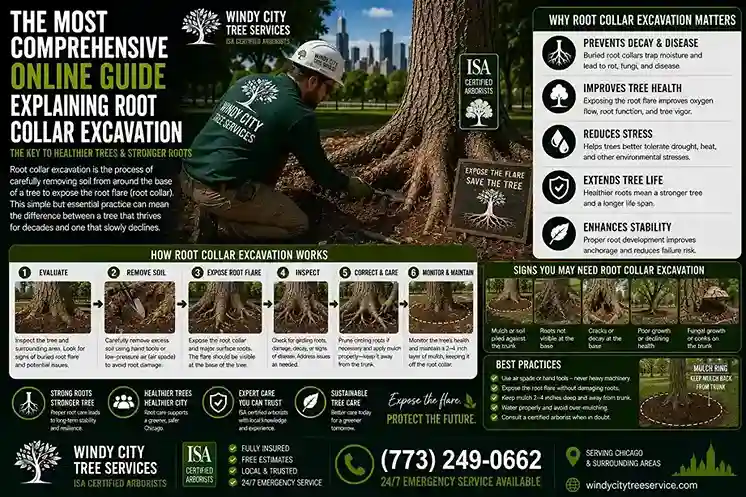
- Root collar excavation. Exposing and correcting issues at the base of the trunk, sometimes performed alongside broader decompaction work.
- Construction protection. For trees near ongoing or planned construction, establishing protective measures prevents new compaction from undoing treatment progress.
- Long-term monitoring. Follow-up inspections track whether the tree is actually responding to treatment over subsequent growing seasons.
10. Preventing Soil Compaction
Prevention is considerably easier, and cheaper, than treatment after the fact. Practical steps:
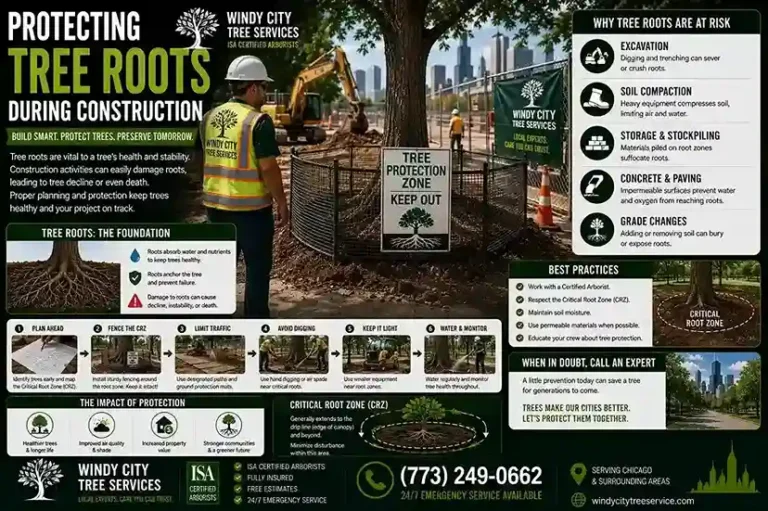
- Establish Tree Protection Zones. Before any construction or major landscaping project, define and protect the root zone area from equipment and material staging.
- Limit traffic across root zones where possible, redirecting foot paths and parking away from sensitive areas.
- Use mulch rings around trees to discourage foot traffic and add a protective, soil-friendly buffer zone.
- Install protective fencing during any nearby construction to physically prevent equipment and material encroachment.
- Plan construction carefully, routing access paths and equipment staging away from established root zones wherever the project allows.
- Consult an arborist before construction begins, not after damage is already done, since preventive planning is far more effective than reactive treatment.
11. Can Trees Recover?
Many trees do improve with proper treatment, particularly when compaction is caught before extensive root death has occurred. Early intervention gives a tree the best chance to regenerate fine root tissue and take advantage of restored soil conditions.
That said, recovery isn’t guaranteed, and it’s important to set realistic expectations. Severity of compaction, soil type, tree species, overall tree health going into treatment, and how long the compaction had been present all affect the outcome. A tree with moderate, recent compaction and strong overall vigor has a meaningfully better outlook than a tree with severe, long-standing compaction and existing health problems.
Ongoing monitoring after treatment is genuinely important, since improvement, when it happens, tends to unfold gradually over one or more growing seasons rather than immediately.
Realistic expectations matter. Soil decompaction and related treatments can meaningfully improve growing conditions and support recovery, but they can’t guarantee full recovery in every case, particularly for severely compacted, long-neglected root zones.
Healthy Soil vs. Compacted Soil
| Healthy Soil | Compacted Soil |
|---|---|
| High oxygen availability | Low oxygen availability |
| Good drainage | Poor drainage, standing water |
| Active root growth | Restricted, shallow roots |
| Healthy microorganisms | Reduced biological activity |
| Better nutrient uptake | Limited nutrient uptake |
Common Causes of Soil Compaction
| Cause | Potential Impact |
|---|---|
| Heavy equipment | Severe, often deep compaction across a wide area |
| Construction | Combined equipment, material, and traffic impact; frequently the most damaging cause |
| Vehicle traffic | Significant compaction even from occasional or light vehicle use |
| Foot traffic | Gradual surface compaction along repeated paths |
| Lawn equipment | Minor but cumulative surface compaction over time |
| Material storage | Sustained pressure and reduced aeration under stored items |
Signs Your Tree May Have Compacted Soil
- Soil around the tree feels noticeably hard, resisting a shovel or screwdriver.
- Water pools or stands after rain instead of draining normally.
- The canopy looks sparse compared to previous years.
- Leaves are smaller than expected for the species and season.
- Leaves show browning or premature drop.
- Growth has slowed noticeably in recent seasons.
- Construction or major landscaping happened nearby recently.
- The area sees heavy, regular foot traffic.
- Surface roots have become more visible than before.
- Overall tree health seems to be declining without an obvious cause.
Frequently Asked Questions
What causes soil compaction?
Compaction results from repeated pressure on the soil, most commonly from construction, heavy equipment, vehicle traffic, foot traffic, and material storage over time.
Can compacted soil kill a tree?
In severe, prolonged cases, yes. Compaction restricts oxygen, water, and nutrient access to roots, which can lead to progressive decline and eventual tree death if left untreated.
How do arborists diagnose soil compaction?
Through a combination of tree health inspection, root zone evaluation, soil testing, Air Spade investigation, and review of site and construction history.
What is Air Spade soil decompaction?
It’s a process using compressed air to loosen compacted soil and excavate around roots without damaging them, unlike traditional digging tools.
Can roots recover after compaction treatment?
Many trees show improvement, especially with early intervention, though recovery isn’t guaranteed and depends on compaction severity, soil type, species, and overall tree health.
Does mulch help compacted soil?
Yes, properly applied organic mulch helps retain moisture, moderate soil temperature, and gradually improve soil structure over time as it breaks down.
How long does soil recovery take?
Improvement typically unfolds over one or more growing seasons rather than immediately, since root regeneration and soil structure improvement both take time.
Can construction compact soil even without direct digging near the tree?
Yes. Equipment and material staging can compact a wider area than the actual construction footprint, sometimes affecting root zones well beyond where visible digging occurred.
Should I aerate soil around mature trees myself?
DIY aeration tools can damage roots if used carelessly near a mature tree. Professional Air Spade decompaction avoids this risk and is generally the safer option for established trees.
When should I call an arborist about possible soil compaction?
If you notice canopy thinning, slow growth, or drainage issues, especially after nearby construction or heavy traffic, a professional evaluation can confirm whether compaction is the cause.
Is soil compaction reversible?
It can often be significantly improved through professional decompaction, though full reversal to original soil structure isn’t always achievable, particularly in severe or long-standing cases.
Do all tree species respond the same way to compacted soil?
No. Sensitivity varies by species; some, like birch and certain maples, tend to be more sensitive, while others, like honey locust, are somewhat more urban-tolerant.
Can I prevent soil compaction during a home renovation?
Yes. Establishing a Tree Protection Zone with fencing before work begins, and routing equipment and material staging away from root zones, significantly reduces compaction risk.
Does parking a car under a tree cause soil compaction?
Yes, even occasional vehicle weight on a root zone can contribute to meaningful compaction over time, particularly in already vulnerable areas.
What’s the difference between soil compaction and poor soil quality generally?
Compaction specifically refers to reduced pore space from physical pressure. Poor soil quality can involve other factors too, like nutrient deficiency or contamination, sometimes alongside compaction.
Can compacted soil cause standing water?
Yes. Reduced pore space limits how well water drains through the soil, which often results in water pooling on the surface after rain instead of infiltrating properly.
Are surface roots always a sign of compacted soil?
Not always, but they can be a sign that roots are struggling to grow downward into compacted soil and are instead spreading closer to the surface where conditions are less restrictive.
Should I get a soil test before treating suspected compaction?
Yes, soil testing as part of a professional evaluation helps confirm compaction and rule out other issues, ensuring the treatment plan actually addresses the real problem.
Can deep root fertilization fix compacted soil on its own?
Not on its own. Fertilization supports a stressed root system but doesn’t address the physical compaction itself, which is why it’s typically paired with decompaction treatment rather than used alone.
How much does Air Spade soil decompaction typically cost?
Costs vary based on the size of the area treated, tree size, and site accessibility. A professional evaluation can provide a specific estimate for your property.
Key Takeaways
- Soil compaction is one of the most common, hidden causes of tree decline in urban environments like Chicago.
- Symptoms show up in the tree, not the soil, which is why professional diagnosis matters, since similar symptoms can result from drought, pests, or disease.
- Air Spade decompaction restores oxygen and water access to the root zone without damaging existing roots, unlike traditional digging methods.
- Prevention is more effective than treatment, particularly through Tree Protection Zones during any nearby construction.
- Recovery is possible but not guaranteed, and depends heavily on compaction severity, soil type, species, and how early treatment begins.
Sources & Further Reading
- International Society of Arboriculture (ISA), Best Management Practices
- Tree Care Industry Association (TCIA)
- ANSI A300 Tree Care Standards
- USDA Forest Service, Urban Forestry Resources
- University of Illinois Extension, Soil & Tree Care Publications
- The Morton Arboretum, Tree & Plant Advice
- Illinois Department of Natural Resources
This article is provided for general educational purposes. Soil compaction is often a hidden issue best confirmed through professional assessment, since similar symptoms can result from drought, pests, disease, or other site conditions.