Benefits of Structural Pruning for Young Trees | Chicago
Benefits of Structural Pruning for Young Trees: Building Stronger, Healthier Trees for Life
Shape stronger, safer, and healthier trees that thrive for decades.
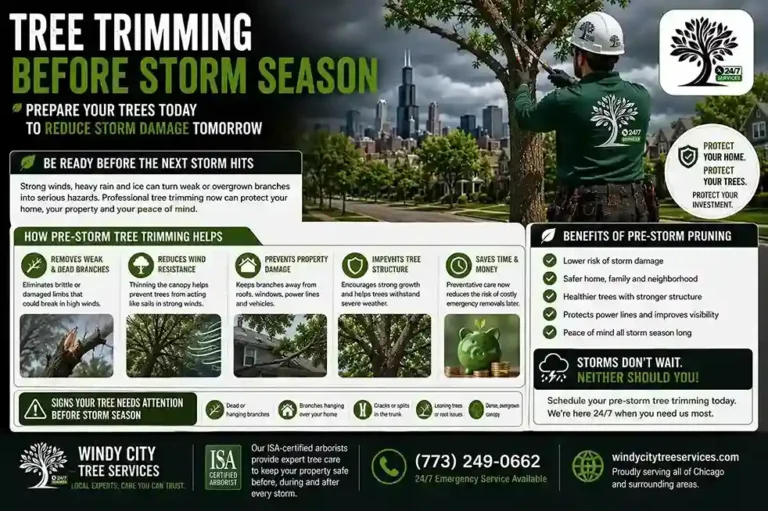
Schedule a Young Tree EvaluationYoung trees don’t need much in their first few years, water, room to grow, and a little guidance. That guidance is structural pruning, and it’s one of the most overlooked investments a homeowner can make. A few carefully placed cuts in a tree’s first five to ten years shape how it grows for the next fifty.
Structural pruning establishes a strong framework of trunk and branches that can support the tree’s eventual size and weight. Skip it, and a tree often develops weak branch unions, competing leaders, or lopsided growth that becomes expensive and sometimes dangerous to correct later. Get it right early, and you avoid most of that future work entirely.
This guide explains how structural pruning works, when to start, which species benefit most, and why early intervention from a certified arborist is one of the best investments you can make in a young tree’s long-term health, safety, and appearance.
What are the benefits of structural pruning for young trees?
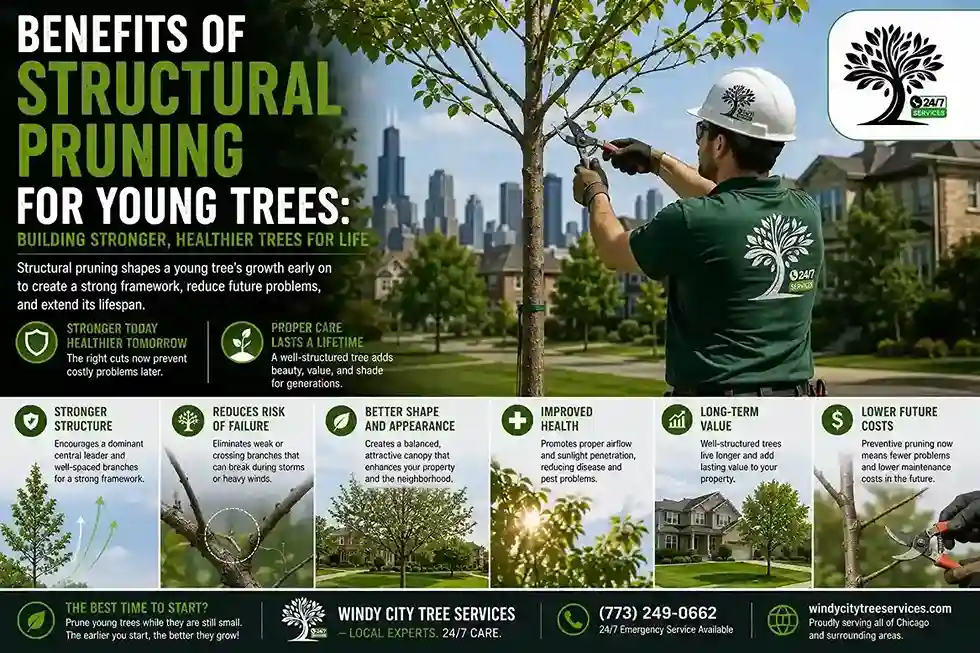
Structural pruning helps young trees develop a strong branch structure, reduces the likelihood of future limb failures, and improves long-term health. It encourages balanced growth around a central leader, minimizes competing stems, and significantly reduces the need for major corrective pruning as the tree matures. The right approach depends on the tree’s species, age, and growing conditions.
1. What Is Structural Pruning?
Structural pruning, sometimes called tree training or formative pruning, is the practice of making selective cuts on young trees to guide long-term canopy development. Rather than reacting to problems, it prevents them, shaping a tree’s architecture while branches are still small and easy to correct.
The goal is usually a single dominant trunk, called a central leader, with well-spaced scaffold branches attached at strong angles along that trunk. Proper branch spacing, both vertically along the trunk and radially around it, prevents any one limb from growing so large it competes with the main structure.
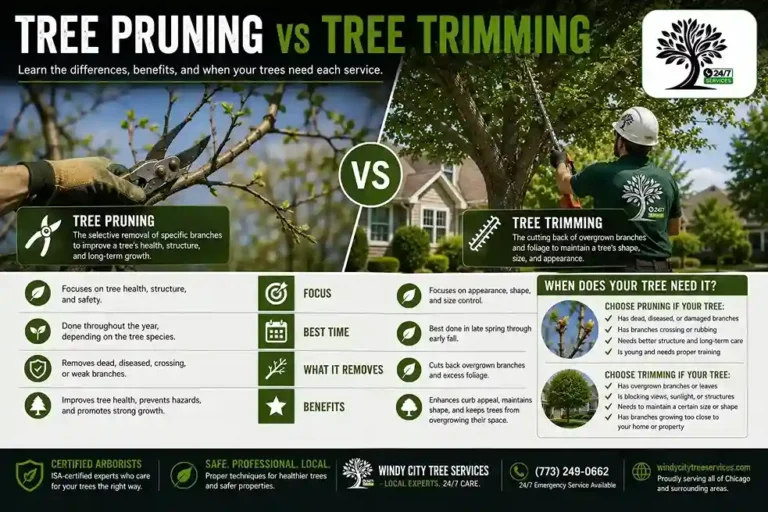
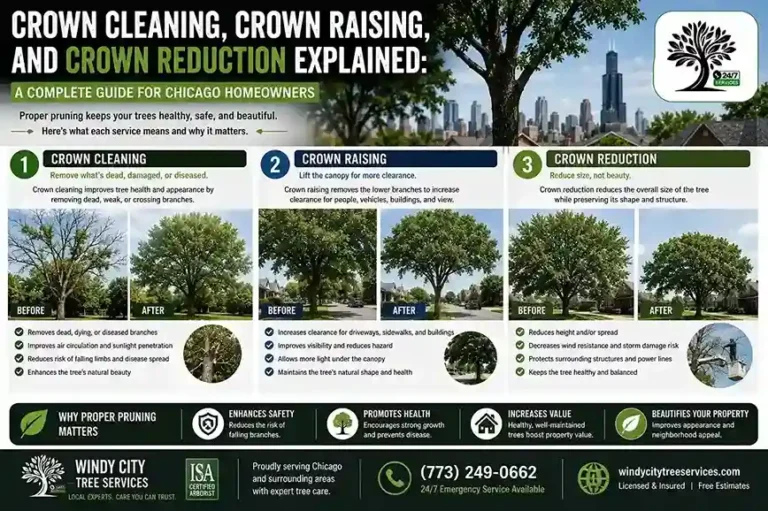
This is different from routine maintenance trimming, which typically removes deadwood, improves clearance, or manages size on a tree that already has its permanent structure established. Structural pruning happens earlier and does more foundational work, setting up decades of healthy growth rather than just tidying up what’s already there.
2. Why Young Trees Need Structural Pruning
Young trees grow fast, and that speed is exactly why early guidance matters so much.
Rapid Growth
Fast-growing young wood can quickly lock in a poor branch arrangement if left uncorrected.
Weak Branch Attachments
Branches that form at narrow angles develop weaker unions that are more prone to failure later.
Competing Leaders
Two trunks fighting for dominance create a structurally unstable tree as it matures.
Crossing Branches
Limbs that rub together create wounds that invite decay and disease over time.
Future Storm Resistance
A well-structured tree distributes wind load evenly, reducing the risk of major limb failure.
Long-Term Safety
Correcting structural issues while branches are small avoids much larger, riskier cuts later.
3. When Should Structural Pruning Begin?
Timing depends on the tree’s age, species, and vigor, but general guidelines help homeowners plan ahead.
Newly Planted Trees
Minimal pruning in the first year or two, mostly removing damaged wood while the tree establishes its root system.
Establishment Period
Once a tree is rooted in, usually two to three years after planting, light structural corrections can begin.
Young Developing Trees
Years three through ten are the prime structural pruning window, when corrections are easiest and least invasive.
Inspection Schedules
An annual or biennial check-in lets an arborist catch developing issues before they require larger cuts.
Appropriate Intervals
Most young trees benefit from light structural pruning every one to three years until the framework is established.
💡 Did You Know?
University Extension programs generally recommend structural pruning start within the first few years after planting, since correcting a poorly formed leader gets significantly harder, and more invasive, once a tree matures.
4. The Science Behind Strong Tree Structure
Good tree architecture isn’t just visual. It reflects real differences in mechanical strength.
Branch Attachment Angles
Branches attached at wider angles (roughly 45 to 60 degrees from the trunk) form stronger wood connections than narrow, upright angles.
Central Leader Dominance
A single dominant trunk grows straighter and distributes weight more evenly than a tree with multiple competing tops.
Codominant Stems
Two stems of similar size growing from nearly the same point often lack a strong structural connection between them.
Included Bark
When bark gets pinched between two closely angled stems, it prevents solid wood-to-wood connection, creating a weak point.
Load Distribution
Evenly spaced branches around and along the trunk spread wind and snow load more evenly across the canopy.
Wind Resistance
A well-structured canopy flexes and sheds wind more predictably than one with lopsided or overcrowded growth.
5. Benefits of Structural Pruning
Stronger Branch Structure
Well-spaced, wide-angled branches hold up better under wind and weight.
Reduced Storm Damage
Balanced canopies are less prone to sudden limb failure during high winds.
Better Tree Health
Removing competing growth early directs energy toward a stronger, more efficient framework.
Longer Lifespan
Trees with sound structure avoid the internal decay that often follows poor pruning cuts or storm damage.
Improved Appearance
A balanced canopy with a clear central leader typically looks more attractive as the tree matures.
Lower Future Maintenance
Correcting structure early avoids costly, invasive corrective pruning or removal later.
Increased Property Value
Healthy, well-formed mature trees are a lasting landscape asset that adds curb appeal.
Reduced Liability
Fewer structural defects mean a lower risk of limb failure over a home, driveway, or sidewalk.
Better Canopy Balance
Even weight distribution reduces the strain on any single branch or side of the tree.
6. Common Structural Problems in Young Trees
Multiple Leaders
Competing trunks fight for dominance instead of forming one strong central stem.
Crossing Branches
Limbs that rub create wounds and invite decay or pest entry points.
Narrow Branch Angles
Tight angles between branch and trunk form weaker attachments prone to splitting.
Co-Dominant Stems
Two similarly sized stems from nearly the same point, a classic future failure point.
Included Bark
Bark trapped between branch and trunk prevents a strong structural bond from forming.
Low Branches
Branches too close to the ground can require removal later, sometimes leaving large wounds.
Poor Branch Spacing
Branches clustered too closely together compete for light and structural dominance.
Left uncorrected, these issues tend to compound. A codominant stem that seems minor at year three can become a major structural liability, and a much bigger cut, by year fifteen. Early correction almost always means smaller, less invasive pruning cuts.
7. Structural Pruning Techniques
Certified arborists use a specific set of pruning techniques, consistent with ANSI A300 pruning standards, to guide young tree structure.
Subordination Pruning
Shortening a competing branch so the main leader remains clearly dominant.
Central Leader Development
Selecting and maintaining one strong, upright stem as the tree’s permanent trunk.
Scaffold Branch Selection
Choosing well-spaced, wide-angled branches to form the tree’s permanent framework.
Temporary Branch Management
Keeping low, temporary branches in place briefly to help trunk taper before removing them.
Reduction Cuts
Shortening a branch back to a smaller lateral to control size without removing it entirely.
Thinning Cuts
Removing entire branches at their point of origin to reduce density without stubbing.
8. Tree Species That Benefit Most
Every species has its own growth habit, and structural pruning strategies adjust accordingly.
Oak
Naturally strong central leader but benefits from early scaffold spacing on a long-lived tree.
Maple
Prone to codominant stems, making early leader correction especially valuable.
Elm
Vase-shaped growth habit benefits from early scaffold selection to avoid weak upper unions.
Honey Locust
Generally responds well to structural pruning with minimal ongoing correction needed.
Ash
Benefits from early structure, though health monitoring for emerald ash borer remains a priority.
Birch
Fast-growing with a tendency toward multiple leaders that benefit from early subordination.
Sycamore
Vigorous growth can quickly lock in poor structure without regular early correction.
Kentucky Coffeetree
Generally strong natural form, with pruning focused on spacing rather than correction.
Hackberry
Tends toward dense, twiggy growth that benefits from early thinning and spacing.
Crabapple
Ornamental form benefits from early shaping to balance structure with flowering display.
9. Chicago’s Climate and Young Tree Development
Chicago’s growing conditions add extra pressure on young trees, which makes structural pruning especially valuable here.
High Winds
Open lots and boulevards expose young trees to wind loads that test weak branch unions early.
Heavy Snow
Wet snow adds sudden weight that a poorly structured young canopy may not distribute well.
Ice Storms
Ice accumulation stresses narrow branch angles more than well-formed, wide-angled unions.
Urban Heat Island
City heat adds physiological stress that a well-structured tree tolerates better than a stressed one.
Soil Compaction
Compacted urban soil limits root growth, making strong above-ground structure even more important.
Road Salt
Salt exposure near streets and sidewalks adds stress that healthy structural growth helps offset.
Small Planting Spaces
Tight parkway strips and small yards mean structure has to be right the first time, with little room for error.
10. Common Homeowner Mistakes
Topping
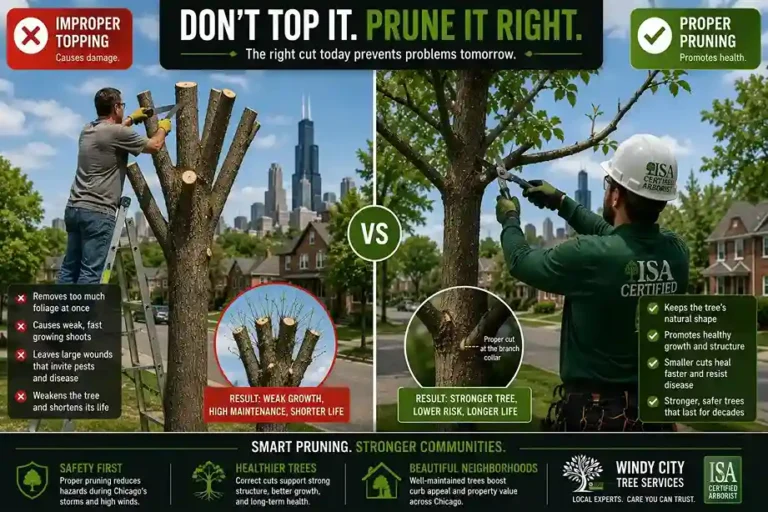
Cutting back a tree’s main stems creates weak regrowth and long-term structural instability.
Over-Pruning
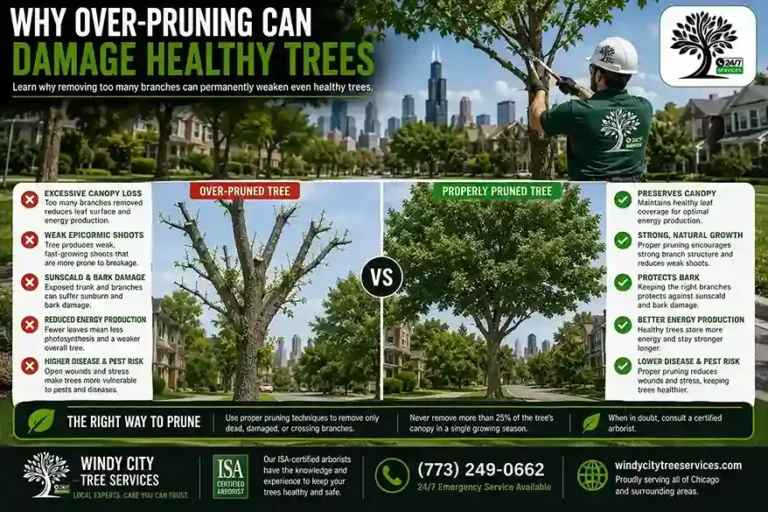
Removing too much canopy at once stresses the tree and can trigger weak regrowth.
Removing the Central Leader
Cutting the main leader by accident can lead to multiple competing tops.
Incorrect Cuts
Flush cuts or stub cuts heal poorly compared to proper cuts at the branch collar.
Pruning Too Much at Once
Structural pruning works best as light, repeated corrections over several years, not one heavy session.
Improper Timing
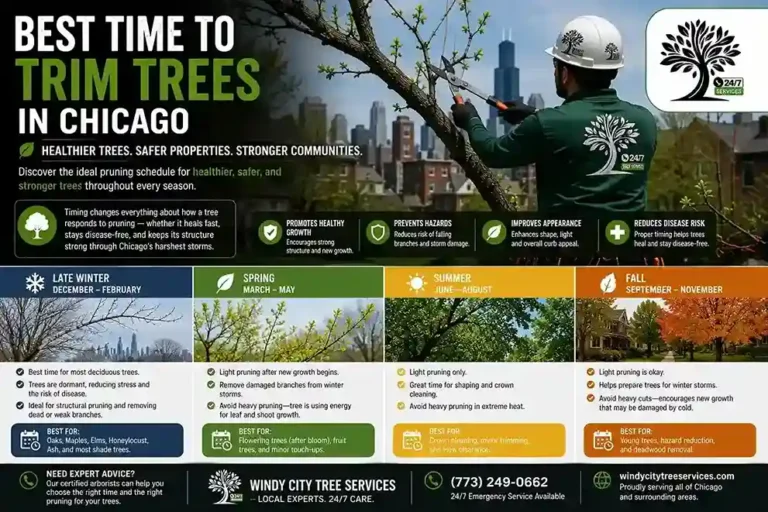
Pruning at the wrong time of year can stress certain species or increase disease risk.
DIY Mistakes
Without training, it’s easy to remove the wrong branches or make cuts that weaken the tree’s future structure.
11. Structural Pruning vs. Corrective Pruning
Structural pruning is preventive, done early to guide a tree’s natural development. Corrective pruning is reactive, done later to fix problems that already exist, often requiring larger cuts and carrying more risk to the tree’s long-term health.
Prevention (Structural)
Small, early cuts on young wood guide growth before problems fully develop.
Correction (Corrective)
Larger cuts on established wood attempt to fix issues that have already taken hold.
Cost Comparison
Early structural pruning is typically far less expensive than major corrective work or eventual removal.
Long-Term Outcomes
Trees pruned early for structure generally develop stronger, more resilient form than those corrected later.
12. Long-Term Maintenance Plan
Structural pruning works best as part of an ongoing care plan, not a one-time fix.
Annual Inspections
Regular check-ins catch developing structural issues while they’re still easy to correct.
Tree Health Care
Monitoring for pests and disease keeps a well-structured tree healthy as it matures.
Fertilization
Supports vigorous, even growth that responds well to ongoing structural guidance.
Root Care
Healthy roots support the above-ground structure that pruning has worked to establish.
Future Canopy Pruning
As the tree matures, pruning shifts from structural correction to maintenance and clearance.
13. How Arborists Evaluate Young Trees
Species Identification
Confirms the tree’s natural growth habit and typical structural tendencies.
Growth Habit
Assesses whether the tree naturally forms a strong central leader or needs more active guidance.
Branch Architecture
Reviews current branch angles, spacing, and any competing stems.
Root Flare
Checks that the root flare is visible and the tree wasn’t planted too deep.
Vigor
Evaluates overall growth rate and health to determine how the tree will respond to pruning.
Defects
Identifies included bark, codominant stems, or other early structural concerns.
Future Growth Potential
Considers mature size and site constraints when planning the pruning approach.
14. Why Professional Arborists Matter
Structural pruning decisions made in a tree’s first decade shape its entire life. An ISA Certified Arborist brings scientific training in tree biology and adherence to ANSI A300 pruning standards, meaning every cut serves a specific structural purpose rather than just removing whatever looks like it’s in the way.
15. Building a Tree That Lasts for Generations
Long-Term Value
A well-structured mature tree remains a landscape asset for decades, often outlasting the home’s original owners.
Storm Resilience
Strong branch architecture holds up far better under the wind and ice loads Chicago sees each year.
Healthier Canopy
Balanced structure supports even light distribution and more efficient growth throughout the tree.
Safer Neighborhoods
Fewer structural defects mean fewer hazardous limb failures over homes, sidewalks, and streets.
Sustainable Urban Forests
Trees trained well early require less intervention over their lifespan, supporting a healthier, longer-lived canopy citywide.
Structural Pruning vs. Routine Tree Trimming
| Feature | Structural Pruning | Routine Trimming |
|---|---|---|
| Primary Goal | Build strong, permanent branch architecture | Maintain appearance, clearance, and remove deadwood |
| Tree Age | Young, developing trees | Any age, most common on mature trees |
| Long-Term Benefits | Reduces future storm damage and major corrective work | Keeps an established tree healthy and tidy |
| Frequency | Light corrections every 1 to 3 years while young | Every 2 to 3 years depending on species and site |
| Focus | Central leader, scaffold branches, spacing | Deadwood, clearance, minor shaping |
Young Tree Without vs. With Structural Pruning
| Feature | Without Structural Pruning | With Structural Pruning |
|---|---|---|
| Branch Structure | Often develops competing leaders or weak unions | Strong central leader with well-spaced scaffolds |
| Storm Resistance | More prone to limb failure in wind and ice | Better load distribution and resilience |
| Future Maintenance | Often requires larger, more invasive corrective cuts | Mostly light maintenance pruning |
| Safety | Higher risk of future hazardous defects | Fewer structural defects over the tree’s life |
| Lifespan | May decline earlier due to structural failure or decay | Generally longer, healthier lifespan |
Homeowner Checklist: Does Your Young Tree Need Structural Pruning?
- Does the tree have more than one main trunk?
- Are branches crossing or rubbing against each other?
- Are limbs growing at narrow, upright angles?
- Is one side of the canopy noticeably heavier than the other?
- Are any branches growing very close together along the trunk?
- Is the central leader clearly defined, or are there competing tops?
- Has the tree never been professionally pruned since planting?
If you answered yes to two or more of these, a professional evaluation is a good next step.
Visual Guides Worth Creating
🌱 Young Tree Growth Stages
A visual timeline from planting through the establishment period to a fully structured young tree.
🌳 Central Leader Diagram
A labeled illustration showing a single dominant trunk with balanced scaffold branches.
📐 Branch Attachment Angles
A side-by-side comparison of strong wide-angle attachments versus weak narrow angles with included bark.
🗓️ Structural Pruning Timeline
A visual schedule showing recommended pruning intervals across a young tree’s first decade.
📏 Scaffold Branch Spacing
A diagram illustrating ideal vertical and radial spacing between permanent scaffold branches.
🔄 Before-and-After Structural Pruning
Paired illustrations showing a young tree before correction and after several years of guided growth.
Frequently Asked Questions
What is structural pruning?
Structural pruning is the practice of making selective cuts on young trees to build a strong central leader and well-spaced scaffold branches, guiding long-term canopy development before problems set in.
When should young trees be pruned?
Light structural pruning typically begins once a tree is established, usually two to three years after planting, and continues periodically through its first decade.
How often should structural pruning be performed?
Most young trees benefit from light structural pruning every one to three years until their permanent framework is established, though this varies by species and growth rate.
Can structural pruning prevent storm damage?
Yes. A well-structured canopy with wide branch angles and even spacing distributes wind and ice load more evenly, reducing the risk of major limb failure.
Does pruning stunt tree growth?
Light, well-planned structural pruning does not stunt growth. Over-pruning or removing too much canopy at once can stress a tree, which is why timing and technique matter.
What is a central leader?
The central leader is a tree’s single dominant, upright trunk. Maintaining one strong leader helps the tree develop a stable, well-balanced structure.
What are scaffold branches?
Scaffold branches are the permanent, well-spaced limbs that form a tree’s main structural framework as it matures.
Is structural pruning necessary for every tree?
Most young trees benefit from at least some structural guidance, though the amount needed depends on the species’ natural growth habit and site conditions.
Can homeowners do structural pruning themselves?
We don’t recommend it. Incorrect cuts can weaken a tree’s future structure permanently, and a certified arborist is trained to identify which branches to correct and which to leave.
How much does structural pruning cost?
Cost depends on the tree’s size, species, and condition. We provide free, written estimates after an in-person evaluation.
What happens if a young tree is never structurally pruned?
It may develop competing leaders, weak branch unions, or lopsided growth that becomes more difficult and expensive to correct as the tree matures.
Does structural pruning follow an industry standard?
Yes. Professional structural pruning follows ANSI A300 pruning standards and ISA Best Management Practices for tree care.
Can structural pruning improve a tree’s appearance?
Yes. A tree with a clear central leader and balanced scaffold branches typically develops a more attractive, symmetrical canopy over time.
Is structural pruning different for evergreens versus deciduous trees?
Yes, growth habits differ significantly between species, so pruning timing and technique should be tailored to the specific tree.
What is the difference between structural and corrective pruning?
Structural pruning is preventive work done on young trees, while corrective pruning addresses problems that have already developed, often requiring larger, more invasive cuts.
Can structural pruning reduce future liability?
Yes. Trees with fewer structural defects are less likely to experience hazardous limb failure over structures, driveways, or sidewalks.
Does Chicago’s climate affect young tree pruning?
Yes. High winds, heavy snow, and ice storms put extra stress on weak branch unions, making early structural correction especially valuable here.
How do I know if my tree has a codominant stem problem?
Look for two similarly sized stems emerging from nearly the same point on the trunk. An arborist can confirm whether correction is needed.
Should newly planted trees be pruned right away?
Generally, no. Newly planted trees need time to establish roots first, with only damaged or broken branches removed in the first year or two.
Do you offer free consultations for young tree structural pruning?
Yes, we provide a free, in-person evaluation and written estimate for young tree structural pruning throughout the Chicago area.
Explore More From Windy City Tree Services
Windy City Tree Services is Chicago’s trusted Chicago tree service, staffed by Certified Arborists delivering professional tree care across the city. Learn more about our tree trimming and pruning, tree health inspection and treatment, tree and shrub fertilization, tree cabling and bracing, air spade root care, tree removal, and storm prep and support systems.
Related Articles
- International Society of Arboriculture (ISA), Best Management Practices: Tree Pruning
- American National Standards Institute, ANSI A300 (Part 1): Pruning
- USDA Forest Service, urban tree care and canopy management publications
- University of Illinois Extension, tree pruning and young tree care guidance
- The Morton Arboretum, tree structure and pruning education resources