What to Do After a Tree Falls During a Storm
What to Do After a Tree Falls During a Storm
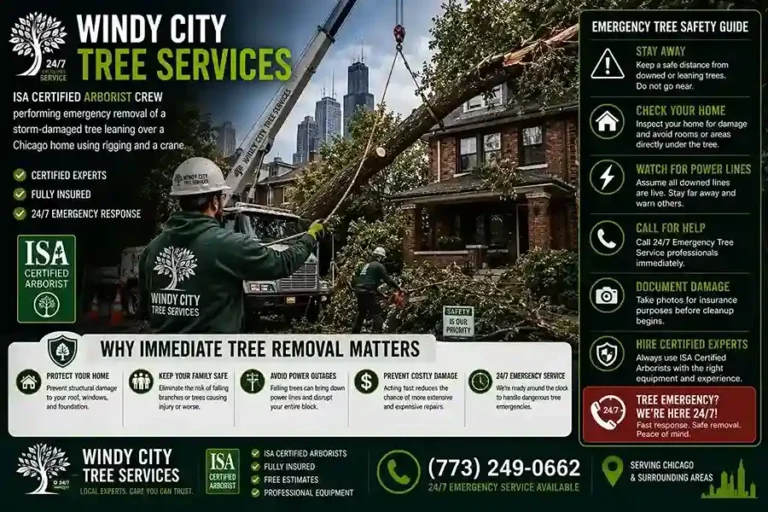
A fallen tree stays dangerous long after the storm passes. Unstable trunks, hanging limbs, and downed power lines can all cause serious injury during cleanup. This guide walks through exactly what to do in the first minutes, hours, and days after a tree falls, so you can protect your family and your property without adding to the damage.
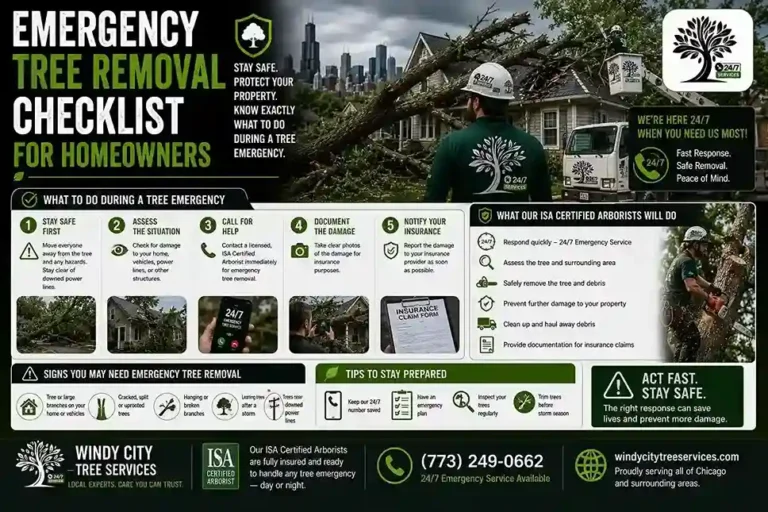
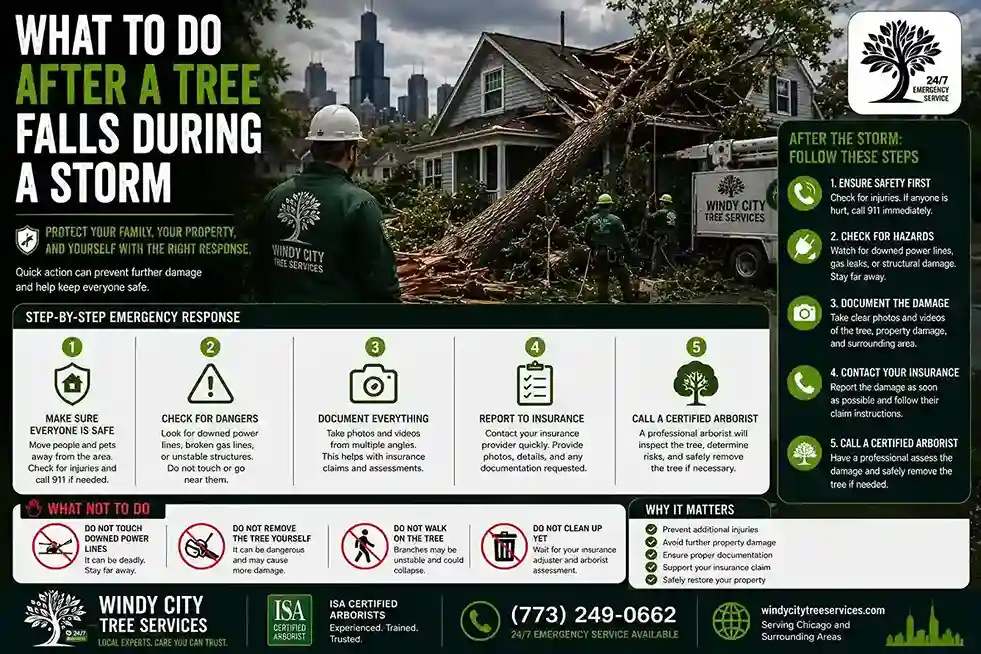
If a tree falls during a storm, first make sure everyone is safe and stay away from the tree and any power lines. Call 911 if there’s an electrical hazard, injury, or the tree is blocking an escape route. Document the damage with photos, notify your insurance company, and hire a qualified emergency tree service. Never attempt to remove an unstable tree without proper training and equipment.
A storm passes, and suddenly there’s a tree across your driveway, resting on your roof, or leaning against your garage. The instinct to start cleaning up right away is understandable, but a storm-damaged tree is one of the more dangerous situations a homeowner can face, precisely because it looks more stable than it actually is.
Falling limbs, unstable trunks, and downed power lines can remain hazardous for hours or even days after the storm itself has cleared. Quick, correct decisions in those first minutes protect lives and limit further property damage. This guide walks through exactly what to do, and just as importantly, what not to do, from the moment you spot a fallen tree through the full emergency tree removal and insurance process.
This guidance follows general storm safety principles from FEMA and the National Weather Service, combined with the tree-specific safety standards ISA Certified Arborists use in the field every day.
“The tree that already fell isn’t always the dangerous one. It’s the tree still standing, cracked and leaning, that catches people off guard.” Windy City Tree Services Arborist Team
1. Stay Safe First
🚨 Immediate Safety Steps
- Check everyone in the household for injuries first, before anything else.
- Evacuate the area if the tree has compromised the structure of your home.
- Stay away from any part of the tree that looks unstable, cracked, or still settling.
- Never approach a downed power line, treat every line as energized.
- Keep children and pets indoors and away from the affected area.
- Call 911 if anyone is injured, trapped, or if downed power lines pose an immediate hazard.
These first few minutes matter more than any cleanup decision that comes after. A tree that has just fallen is still settling, shifting weight, and sometimes continuing to move as branches break free or the trunk finds a new resting position. Treat the entire area as unstable until a professional confirms otherwise.
2. Assess the Situation from a Safe Distance
Once everyone is safe, take a visual inventory of the damage, but only from a distance that keeps you clear of the tree itself. Look for these common scenarios:
- Fallen tree on the home: Note which part of the structure is affected and whether there’s visible roof or wall damage.
- Fallen tree on the garage: Check for structural compromise before anyone enters.
- Tree blocking the driveway: A lower-urgency situation, but still worth documenting before it’s moved.
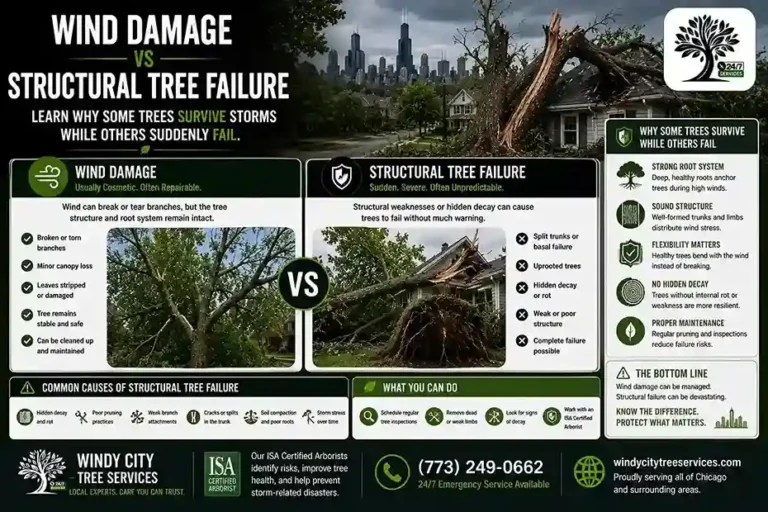
- Leaning trees: A tree that’s leaning but hasn’t fully fallen is often more dangerous than one already on the ground.
- Hanging branches: Broken limbs caught in the canopy, sometimes called widow makers, can fall without warning.
- Split trunks: A visibly cracked or split trunk indicates the tree could shift or fail further at any time.
Visual inspection should happen only from a safe location, never underneath or right next to the tree. If you can’t get a clear view safely, wait for a professional to assess it rather than getting closer.
3. Downed Power Lines Are an Emergency
⚡ Treat Every Downed Line as Energized
Downed power lines don’t always spark or make noise, but they can still be lethal. Follow these steps without exception:
- Assume every downed wire is live, even if it looks inactive.
- Contact your electric utility immediately to report the hazard.
- Stay at least the safe distance recommended by your utility away from the line and anything touching it, including the fallen tree itself.
- Keep other people, children, and pets away from the entire area.
- Wait for utility confirmation that the line is de-energized before any tree work begins nearby.
A tree that fell into or near power lines turns an already dangerous situation into a genuine life-safety emergency. Even branches touching a line can carry current through the wood. No tree removal work, professional or otherwise, should begin near power lines until the utility company has confirmed the area is safe.
4. Document the Damage
Once the immediate hazards are addressed and it’s safe to do so, thorough documentation supports both your insurance claim and any conversation with a tree removal company.
📸 Insurance Documentation Checklist
- Take wide photos showing the full scope of the damage
- Take close-up photos of specific damage points
- Record a walkthrough video narrating what happened
- Photograph roof damage from a safe vantage point
- Photograph any damaged vehicles
- Photograph damaged fences and structures
- Photograph affected landscaping and other trees
- Save any receipts related to emergency mitigation
- Keep written notes with dates, times, and a description of events
Document everything before any cleanup begins, if it’s safe to do so. Insurance adjusters rely heavily on this kind of photo and video evidence, and having it ready speeds up the claims process considerably.
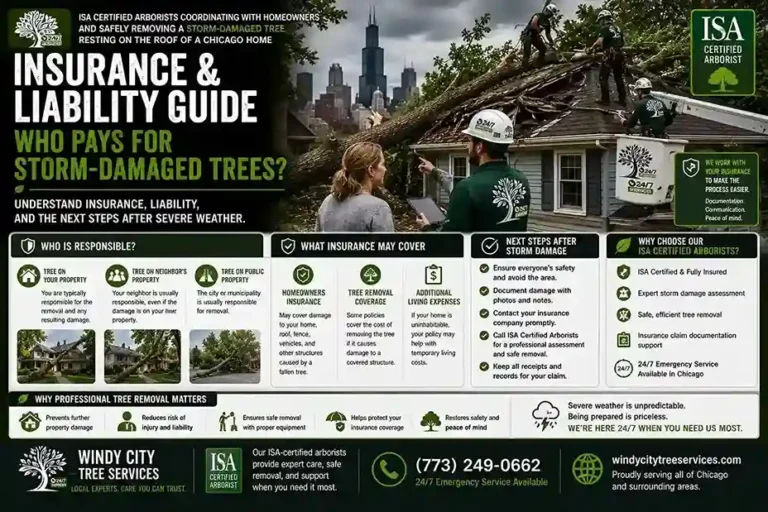
5. Contact Your Insurance Company
Once you’ve documented the damage, contact your insurance company as soon as reasonably possible. Coverage and process vary by insurer and policy, so treat the following as general guidance rather than a guarantee of coverage.
- Homeowners insurance: Often covers tree removal when the tree damaged a covered structure, subject to your policy’s terms.
- Vehicle insurance: Comprehensive coverage typically applies if a tree damaged a parked vehicle.
- Deductibles: Confirm your deductible amount before assuming full coverage.
- Emergency mitigation: Many policies cover reasonable steps taken to prevent further damage, like tarping a roof.
- Claims process: An adjuster typically visits to assess damage before approving repair or removal costs.
- Temporary repairs: Keep receipts for any temporary measures, these are often reimbursable.
- Working with adjusters: Share your documentation directly and ask clear questions about what’s covered.
6. Contact a Professional Emergency Tree Service
Storm-damaged trees require a level of training and equipment that goes well beyond typical yard work. Emergency tree removal should always be handled by:
- ISA Certified Arborists: Trained to assess tree stability and risk following ISA Tree Risk Assessment Qualification principles.
- Fully insured contractors: Protecting you from liability if something goes wrong during the work.
- Emergency response teams: Equipped and available to respond quickly, not just during business hours.
- Specialized equipment operators: Trained on cranes, bucket trucks, and rigging systems specific to storm-damaged trees.
Storm-damaged trees are often under tension in ways that aren’t obvious from the ground. A trained crew reads these tension points and plans a controlled removal sequence, using cranes, rigging, and bucket trucks as needed, that a homeowner with a chainsaw simply isn’t equipped to replicate safely.
7. What NOT to Do
🚫 Never Do These Things After a Storm
- Never climb a damaged tree to inspect or cut it, even one that looks stable.
- Never cut a tensioned limb, wood under tension can release with explosive force.
- Never work near power lines, professional or not, until the utility confirms the area is safe.
- Never use a ladder to reach storm-damaged branches.
- Never attempt a DIY removal of a large or structurally compromised tree.
- Never enter a damaged structure until it’s been assessed for safety.
Storm cleanup injuries spike every year specifically because homeowners underestimate how unpredictable damaged wood behaves. A branch that looks securely caught in a neighboring tree can release without warning. When in doubt, wait for a professional.
8. Temporary Property Protection
- Roof tarping: A properly secured tarp prevents further water damage until permanent repairs happen.
- Water intrusion prevention: Moving valuables away from exposed areas and using buckets or towels to manage active leaks.
- Temporary fencing: Keeping people and pets away from unstable areas of the property.
- Securing debris: Preventing loose branches from becoming additional hazards in continued wind.
- Protecting landscaping: Marking off garden beds and young trees that could be damaged during cleanup equipment access.
These are reasonable, low-risk steps a homeowner can typically take safely. Anything requiring a ladder, chainsaw work, or contact with the fallen tree itself should wait for a professional.
9. How Arborists Remove Storm-Damaged Trees
1. Site Inspection
The crew evaluates the tree, surrounding structures, and any immediate hazards on arrival.
2. Hazard Assessment
Following TRAQ principles, arborists identify tension points, instability, and remaining risk before any cutting begins.
3. Utility Coordination
If power lines are involved, the crew confirms the utility has de-energized the area before proceeding.
4. Rigging Plan
A plan is developed for how each section will be controlled during removal to protect the property.
5. Controlled Dismantling
The tree is removed in sections using ropes, rigging, or a crane depending on size and location.
6. Debris Removal
Branches and trunk sections are cleared from the property.
7. Final Cleanup
The site is cleared of smaller debris and restored as much as possible.
8. Stump Removal Options
Stump grinding is typically discussed and quoted separately once the emergency work is complete.
10. Hidden Damage After Storms
The fallen tree is often the most visible problem, but it’s rarely the only one. Storms create damage that isn’t obvious right away, both to the fallen tree’s neighbors and to the surrounding landscape.
- Root damage: Nearby trees can suffer root disturbance even if they didn’t fall.
- Soil heaving: Shifted or lifted soil near a fallen tree’s root ball can indicate instability in the surrounding ground.
- Internal cracks: Trees that survived the storm may have hidden trunk or limb cracks that aren’t visible from the outside.
- Partial failures: A tree with a large broken limb but an otherwise intact structure still needs assessment.
- Leaning trees: Any tree that developed a new lean during the storm should be inspected before it’s assumed stable.
- Structural weakness: Wind stress can create or worsen weak branch unions that aren’t visible without a trained inspection.
Because of this, it’s worth having nearby trees inspected too, not just the one that fell. A tree that survived one storm with hidden damage is often the one that fails during the next.
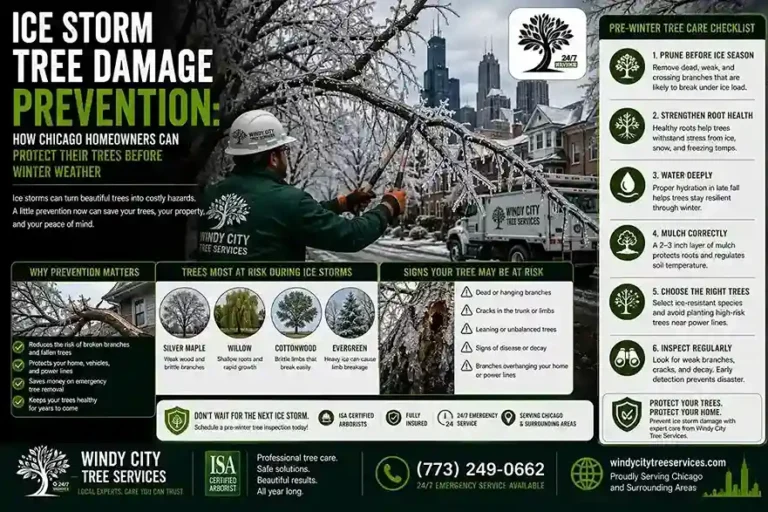
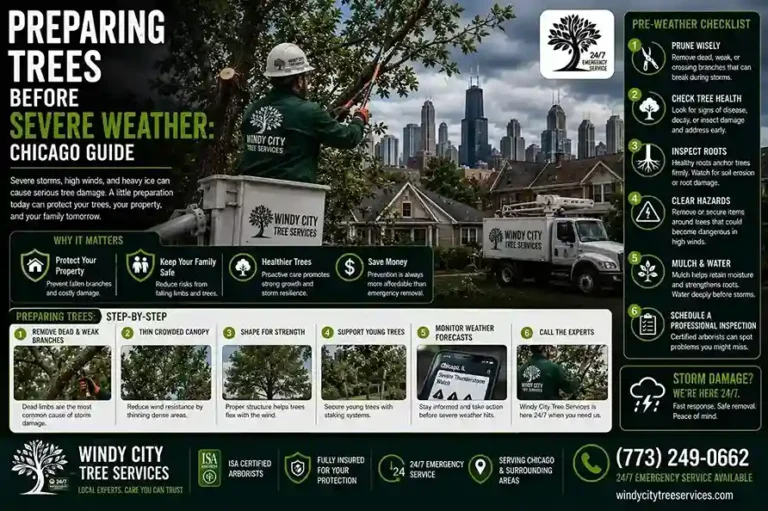
11. Preventing Future Storm Damage
- Routine inspections: Regular professional check-ins catch developing weaknesses before storm season.
- Structural pruning: Correcting weak branch unions reduces failure risk in high wind.
- Crown cleaning: Removing dead or weak wood eliminates the most likely failure points.
- Cabling and bracing: Structural support systems for trees with existing weak points worth preserving.
- Tree health monitoring: Ongoing assessment of vigor and disease pressure that could weaken structural integrity over time.
- Storm preparation plans: A seasonal maintenance schedule built specifically around Chicago’s storm patterns.
12. Chicago Storm Risks
Chicago’s weather creates a specific set of storm risks that make tree failure more common here than in calmer climates. Severe thunderstorms bring straight-line winds capable of snapping weak limbs or toppling trees with compromised root systems outright. Heavy snow loads limbs beyond their capacity, especially wet, dense snow common in late winter storms.
Ice storms add a different kind of stress, coating branches in weight that can cause failure even without significant wind. Lake Michigan’s weather patterns add unpredictable, fast-moving storm systems that can develop with relatively little warning. Chicago’s mature urban tree canopy, much of it decades old, means a large share of the city’s trees carry accumulated structural stress that becomes especially dangerous during severe weather. According to the National Weather Service, the Chicago area sees severe thunderstorm activity regularly throughout the spring and summer months, making seasonal tree preparation a genuinely practical investment rather than an abstract precaution.
13. Emergency Tree Removal Costs
Emergency removal pricing depends on several factors specific to storm situations, and costs can vary significantly from job to job.
- Tree size: Larger trees require more labor, rigging, and sometimes crane support.
- Accessibility: Storm debris and property damage can complicate normal access routes.
- Crane requirements: Trees resting on structures often need a crane for safe, controlled removal.
- Utility hazards: Work near downed power lines requires additional coordination and caution.
- Time of day: After-hours emergency response typically costs more than daytime scheduled work.
- Storm conditions: High demand immediately following a major storm can affect scheduling and pricing.
Costs vary based on site conditions and job complexity, so a written estimate remains the only accurate way to know what a specific emergency job will cost. Our companion guide on average tree removal costs in Chicago covers general pricing factors in more depth.
Comparison Tables
Safe Actions vs Dangerous Actions
| Safe Actions | Dangerous Actions |
|---|---|
| Stay away from power lines | Touch downed wires |
| Call emergency services | Attempt DIY removal |
| Photograph damage from a distance | Climb a damaged tree |
| Hire certified arborists | Cut tensioned limbs |
| Secure the area with tape or cones | Enter unstable structures |
Emergency Contact Checklist
| Contact | When to Call |
|---|---|
| 911 | Injuries, trapped occupants, or active electrical hazards |
| Electric Utility | Any downed or damaged power line, even if it looks inactive |
| Insurance Company | As soon as it’s safe, to begin the claims process |
| Emergency Tree Service | Any fallen or unstable tree that needs professional removal |
| Roofing Contractor | After tree removal, if structural or roof repairs are needed |
🎨 Infographic Suggestions for This Guide
Storm response timeline
Fallen tree safety flowchart
Insurance documentation checklist
Emergency tree removal process
Tree hazard identification guide
Annual storm preparedness calendar
14. Frequently Asked Questions
What should I do if a tree falls on my house?
Check everyone for injuries, evacuate if the structure seems compromised, and call 911 if there’s immediate danger. Once safe, document the damage, contact your insurance company, and call an emergency tree service.
Who is responsible for a fallen tree?
Responsibility often depends on where the tree was rooted and local regulations, though insurance frequently covers removal regardless of fault when a structure is damaged. Check with your insurance provider for specifics.
Will insurance pay for tree removal?
Often, if the tree damaged a covered structure like your home or garage. Coverage for a tree that simply fell in the yard without hitting anything is less consistent. Review your specific policy.
Can I remove a fallen tree myself?
Small, easily accessible trees away from structures and power lines may be manageable for an experienced homeowner. Anything large, unstable, or near a structure or power line should go to a professional.
What if a tree falls on power lines?
Stay well back, treat the line as energized, and contact your electric utility immediately. Do not attempt any tree work until the utility confirms the area is safe.
How quickly should emergency tree removal happen?
As soon as it’s safely possible, especially if the tree is blocking access, resting on a structure, or creating an ongoing hazard. Most emergency tree services offer 24/7 response.
Can a partially fallen tree be saved?
Sometimes, depending on the extent of root and structural damage. A certified arborist can assess whether the tree is a candidate for stabilization or whether removal is the safer option.
Should I move my car after a storm?
If it’s safe to do so and the vehicle isn’t already damaged or blocked in, moving it away from leaning trees or hanging limbs is a reasonable precaution.
Can I enter my house after a tree falls on it?
Only after confirming the structure is safe. If there’s visible structural damage, wait for a professional assessment before entering.
How do arborists safely remove storm-damaged trees?
Using a structured process that includes hazard assessment, utility coordination when needed, a rigging plan, and controlled, section-by-section dismantling to protect the property and crew.
What is the ISA Tree Risk Assessment Qualification?
TRAQ is a credential from the International Society of Arboriculture that trains arborists to systematically evaluate a tree’s likelihood of failure and the potential consequences.
Do I need a permit for emergency tree removal in Chicago?
Emergency removals addressing an active hazard are typically handled without the standard permitting delay, though it’s worth confirming with the city for specific situations.
How long does emergency tree removal typically take?
It varies based on tree size, damage complexity, and whether utility coordination is needed. A straightforward job may take a few hours, while complex situations can take longer.
What should I photograph for my insurance claim?
Wide shots of the overall damage, close-ups of specific damage points, affected structures, vehicles, and landscaping, along with a video walkthrough if possible.
Can storm damage affect trees that didn’t fall?
Yes. Nearby trees can suffer hidden root damage, internal cracks, or new leaning that isn’t obvious without a professional inspection.
Is it safe to use a chainsaw after a storm?
Only for small, stable, easily accessible wood, away from structures and power lines. Larger or unstable trees require professional equipment and training.
What if my neighbor’s tree fell on my property?
Contact your insurance company to understand your coverage, and consider discussing the situation with your neighbor. Insurance responsibility can vary by situation and jurisdiction.
Do you offer 24/7 emergency tree removal in Chicago?
Yes. Storm damage doesn’t wait for business hours, and neither do we. Call (773) 249-0662 any time for emergency dispatch.
How do I prevent tree damage before the next storm?
Schedule regular inspections, address structural weaknesses through pruning or cabling, and have hazardous trees assessed before severe weather season begins.
How do I schedule emergency tree removal?
Call (773) 249-0662 any time for emergency response, or email info@windycitytreeservices.com for non-urgent scheduling.
15. Preparing for the Next Storm
📅 Annual Storm Preparation Checklist
- Schedule a professional tree inspection before storm season
- Address any structural weaknesses with preventive pruning
- Save emergency contacts, utility, insurance, and tree service, somewhere accessible
- Review your insurance policy for tree-related coverage details
- Keep up with routine property maintenance around mature trees
Storm Damage Response Checklist
✅ Right After a Tree Falls
- Check everyone for injuries
- Stay away from power lines
- Secure the area from others, including kids and pets
- Photograph and document all damage
- Contact your insurance company
- Call an emergency tree service
- Avoid any DIY cleanup near the tree
- Schedule a full inspection once immediate hazards are cleared
Related Articles
Emergency Tree Removal Services in Chicago
When a tree falls during a storm, every minute matters. Windy City Tree Services provides professional emergency tree removal, storm damage cleanup, hazard assessments, and preventive tree care to help protect your family and property before and after severe weather.
info@windycitytreeservices.com · 323 W Carroll Ave, Chicago, IL 60612 · Serving Chicago 24/7