Dutch Elm Disease Prevention Guide | Windy City Tree Services
American elms remain one of Chicago’s most recognizable urban trees, their tall, vase-shaped canopies once lined nearly every boulevard in the city. Dutch Elm Disease has devastated millions of elm trees across North America since it first arrived, and it’s still the single biggest threat facing the elms that remain today.
The good news is that prevention and early detection genuinely work. A healthy elm caught early, before the fungus spreads too far through its vascular system, has a real chance at treatment and survival. A tree caught late usually doesn’t. That gap is exactly why professional inspection matters so much for anyone with a mature elm on their property.
This guide covers how Dutch Elm Disease spreads, how to recognize the earliest warning signs, what prevention strategies actually reduce risk, and when it’s time to call an ISA Certified Arborist. It draws on guidance from the International Society of Arboriculture (ISA), the USDA Forest Service, and the University of Illinois Extension.
Quick Answer: How Can Dutch Elm Disease Be Prevented?
Prevention includes regular inspections, early identification of infected trees, prompt removal of infected wood when appropriate, pruning during recommended seasons, avoiding unnecessary trunk injuries, monitoring elm bark beetle activity, and working with an ISA Certified Arborist to develop a preventive care plan tailored to your tree.
1. What Is Dutch Elm Disease?
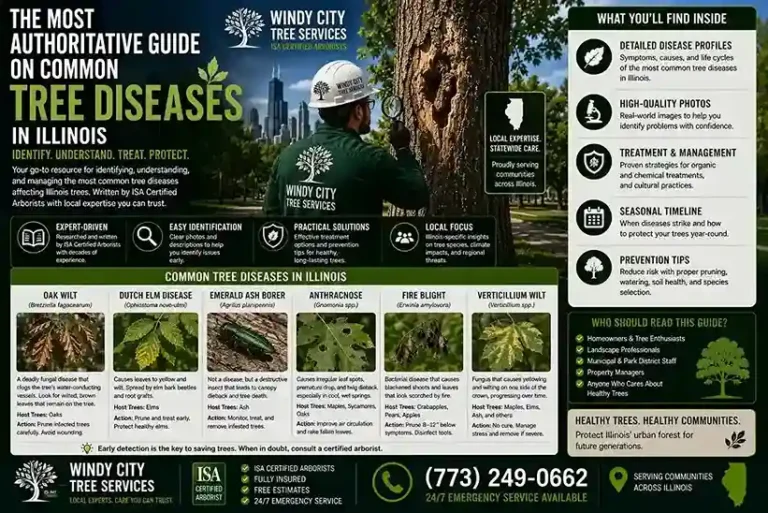
Dutch Elm Disease (DED) is a fungal disease that blocks a tree’s vascular system, cutting off the flow of water and nutrients between the roots and the canopy. It’s caused by two related fungal pathogens, Ophiostoma novo-ulmi and the older, less aggressive Ophiostoma ulmi. The disease gets its name from the Dutch researchers who first identified it in the early 1900s, though it likely originated in Asia.
DED reached North America in the late 1920s, probably on elm logs imported for furniture veneer, and spread rapidly through the continent’s urban forests over the following decades. According to the USDA Forest Service, the disease has killed the majority of mature American elms that once lined streets and parks across the country, permanently reshaping the look of many American cities.
Chicago was hit especially hard, since American elms were once the dominant street tree throughout the city. Understanding how the disease works is the first step in protecting the elms that remain.
💡 Did You Know?
Dutch Elm Disease isn’t actually Dutch in origin. It’s named for the country where the fungus was first scientifically described, even though researchers believe the pathogen originated in Asia, where native elm species evolved natural resistance to it over time.
2. How Dutch Elm Disease Spreads
DED spreads through two main pathways, and understanding both is essential to preventing it.
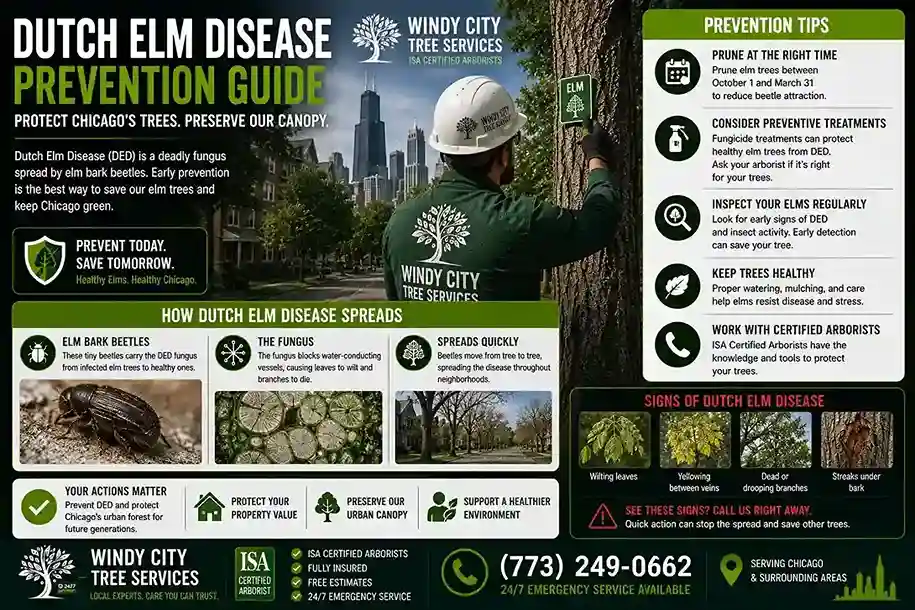
- Native elm bark beetles: These beetles breed under the bark of dying or recently cut elm wood, picking up fungal spores as they emerge and carrying them to healthy trees when they feed.
- European elm bark beetles: A separate introduced species that spreads DED the same way, feeding in the bark crevices of healthy elm twigs and introducing spores directly into the vascular system.
- Root graft transmission: Elms growing close together often fuse roots underground. Once one tree is infected, the fungus can travel directly through these root grafts into neighboring healthy elms without any beetle involved at all.
- Firewood movement: Moving infected elm firewood into a new area can introduce both the fungus and the beetles that carry it, which is why storing infected wood near healthy elms is genuinely risky.
- Improper pruning practices: Pruning during beetle activity season creates fresh wounds that attract beetles looking for a place to feed, increasing infection risk.
- Fresh wounds: Any wound to the bark, whether from storm damage, construction, or careless equipment use, creates an entry point the fungus and its beetle carriers can exploit.
Elm bark beetles and underground root grafts are the two primary ways Dutch Elm Disease spreads between trees.
3. Which Elm Trees Are Most Susceptible?
| Elm Species | Susceptibility |
|---|---|
| American Elm | Highly susceptible; the species hit hardest by DED across North America |
| Slippery Elm | Susceptible, though generally somewhat less than American elm |
| Rock Elm | Susceptible, with variable individual tree response |
| Siberian Elm | More tolerant, though not immune |
| Hybrid Elms | Bred specifically to combine desirable form with improved resistance |
| Disease-Resistant Cultivars | Developed through breeding programs and generally the safest choice for new plantings |
If you’re planning a new planting, disease-resistant elm cultivars developed through breeding programs at institutions like the Morton Arboretum offer a much lower long-term risk than standard American elm, while still providing that classic elm form and shade.
4. Early Symptoms of Dutch Elm Disease
Catching DED early depends entirely on knowing what to look for. Symptoms typically start in one part of the canopy and spread from there.
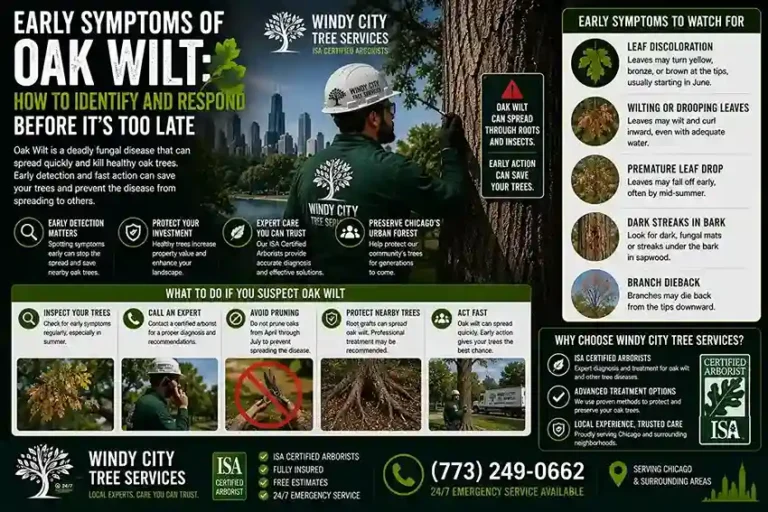
- Yellowing leaves: Often the first visible sign, usually starting on a single branch rather than the whole tree.
- Wilting foliage: Leaves droop and lose their normal turgor even with adequate soil moisture.
- Brown leaves: Wilted foliage progresses to browning, usually starting at the leaf margins.
- Branch flagging: A single branch with wilted, curled, yellow-to-brown leaves stands out clearly against otherwise healthy green canopy. This is one of the clearest early warning signs.
- Premature leaf drop: Affected branches can drop leaves weeks or months before normal fall color.
- Progressive canopy thinning: As the disease spreads through the vascular system, more of the crown shows symptoms over time.
- Brown streaking in sapwood: Cutting into a small affected branch reveals brown or reddish-brown streaking in the outer growth rings, a hallmark diagnostic sign an arborist looks for.
⚠️ Act Quickly
Branch flagging in summer, a single limb with wilted, yellowing leaves surrounded by otherwise healthy foliage, is one of the clearest early signs of Dutch Elm Disease. Don’t wait to see if it spreads. Contact an arborist right away.
5. Disease Progression
Initial Infection
A beetle feeding wound or root graft introduces fungal spores into the vascular tissue.
Vascular Blockage
The tree’s own defensive response, combined with fungal growth, clogs the vascular tissue that carries water upward.
Branch Dieback
Branches supplied by blocked vascular tissue wilt, yellow, and die, producing the flagging symptom.
Whole-Tree Decline
Without intervention, the blockage spreads through more of the vascular system, affecting an increasing share of the canopy.
Tree Mortality
In highly susceptible elms, this progression can take as little as a few weeks. In more tolerant cultivars, decline can stretch over multiple growing seasons.
Progression speed varies significantly by species, tree health, and how the infection was introduced. A tree infected through root grafts often declines faster than one infected by a single beetle feeding wound, since the fungus enters through a much larger vascular pathway.
6. How Arborists Diagnose Dutch Elm Disease
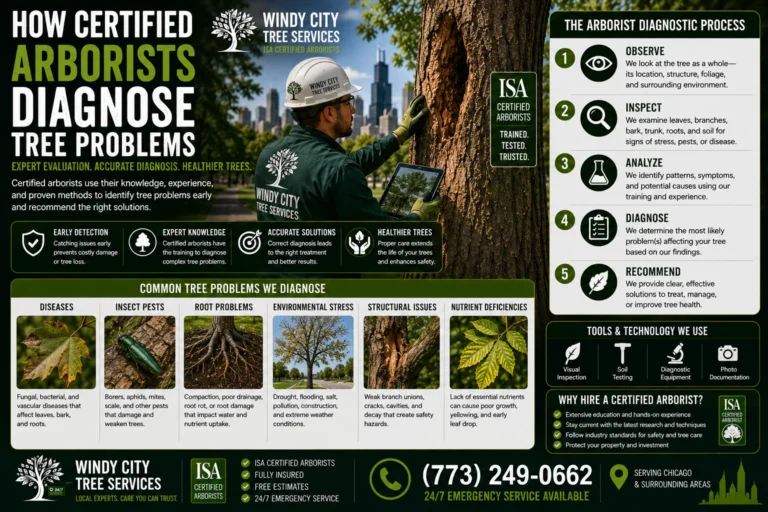
Several tree diseases and environmental stressors can produce symptoms that look similar to DED at first glance, which is exactly why professional diagnosis matters. Arborists combine several methods:
- Visual inspection: Checking for flagging, canopy thinning, and the overall pattern of decline across the tree.
- Tree history: Recent construction, storm damage, nearby infected elms, or root graft potential with neighboring trees all factor into the assessment.
- Sapwood examination: Cutting into a small symptomatic branch to check for the characteristic brown vascular streaking.
- Laboratory testing: When visual signs aren’t conclusive, a sample can be sent to a diagnostic lab to confirm the presence of Ophiostoma fungal pathogens.
- Site assessment: Evaluating nearby elms for root graft risk and beetle activity to understand the full scope of exposure.
- Disease confirmation: Combining all of the above before recommending a course of action, since the consequences of a wrong diagnosis, in either direction, are significant.
Laboratory testing may be necessary to confirm a diagnosis with certainty, particularly in early or ambiguous cases. Our tree health inspection and treatment service includes this full diagnostic process.
7. Prevention Strategies
Prevention is far more effective, and far less costly, than treating an advanced infection. The strategies below reflect current guidance from the ISA and university extension programs.
- Annual inspections: Catching flagging or early canopy symptoms during a routine check gives you the best chance at a positive outcome.
- Preventive pruning: Structural pruning that promotes good vascular health also reduces the deadwood and weak points that stress a tree overall.
- Sanitation practices: Promptly removing and properly disposing of dead or dying elm wood eliminates breeding habitat for elm bark beetles.
- Root graft disruption where appropriate: In high-risk situations near a confirmed infected tree, mechanically severing root grafts between elms can help prevent underground transmission.
- Monitoring beetle activity: Awareness of local beetle populations and known infected trees in the area helps inform how aggressively to monitor your own elms.
- Maintaining tree vigor: A healthy, well-watered, properly fertilized elm has more capacity to compartmentalize infection than a stressed one.
- Avoiding unnecessary injuries: Protect trunks and roots from lawn equipment, construction activity, and unnecessary wounds, especially during beetle season.
📅 Pruning Timing Matters
Prune elms during the dormant season, late fall through late winter, whenever possible. Pruning during beetle flight season creates fresh wounds that actively attract the beetles that spread DED. This follows ANSI A300 tree care standards for proper pruning timing.
Learn more about our tree trimming and pruning service and tree and shrub fertilization service, both part of a solid elm prevention plan.
8. Can Dutch Elm Disease Be Treated?
Yes, in some cases, though treatment success depends heavily on early detection and overall tree health.
- Fungicide injections: Systemic fungicide can be injected directly into a tree’s vascular system, and this treatment works best as a preventive measure or at the very earliest stage of infection.
- Candidate trees: The best candidates for treatment are high-value, structurally sound trees with limited, recently developed symptoms, not trees already showing extensive canopy dieback.
- Timing considerations: Treatment timing matters. Injections applied too late, once the vascular blockage has spread widely, are far less likely to succeed.
- Monitoring: Treated trees need ongoing monitoring in subsequent seasons, since treatment reduces risk but doesn’t guarantee permanent protection.
- Limitations: Treatment isn’t a cure for advanced infection, and it isn’t a one-time fix. It’s an ongoing management commitment for a valuable tree.
An arborist can evaluate whether your elm is a good treatment candidate based on symptom extent, tree health, and value to your property.
9. When Tree Removal Is Necessary
Removal becomes the responsible choice in several situations:
- Extensive infection: Once symptoms cover a large share of the canopy, treatment options become far less effective.
- Severe canopy loss: A tree with most of its crown already dead has little chance of meaningful recovery.
- Structural hazards: Advanced disease weakens wood, creating a genuine safety risk near homes, driveways, and sidewalks.
- Preventing disease spread: Removing a severely infected tree protects nearby healthy elms from both beetle transmission and root graft spread.
- Professional removal: DED-infected wood should be handled and disposed of properly to avoid spreading beetles to new areas, which is part of why professional removal matters here specifically.
If removal is necessary, our tree removal service and emergency tree removal service handle the work safely and dispose of infected wood appropriately.
10. Protecting Chicago’s Urban Canopy
Mature elms that survived the original DED epidemic, or that were planted since as resistant cultivars, represent decades of irreplaceable canopy growth. Protecting them matters for more than aesthetics. Mature trees support biodiversity, cool city streets, manage stormwater, and add real, measurable value to a property.
The Illinois Department of Natural Resources and the USDA Animal and Plant Health Inspection Service (APHIS) both continue to monitor tree disease pressure across the state, and community-level tree care, homeowners staying alert to symptoms and reporting them promptly, remains one of the most effective tools in slowing DED’s spread. Long-term management of Chicago’s remaining elm population depends on exactly this kind of individual vigilance multiplied across thousands of properties.
Healthy Elm vs. Dutch Elm Disease
| Healthy Elm | Diseased Elm |
|---|---|
| Full, uniform canopy | Thinning canopy |
| Green leaves throughout | Yellowing or browning leaves |
| Strong, consistent branch growth | Flagging branches |
| Healthy vascular tissue | Brown vascular streaking |
| Uniform crown shape | Progressive dieback |
Prevention vs. Treatment vs. Removal
The table below outlines general response patterns by situation. Actual recommendations always require a professional on-site assessment of your specific tree.
| Situation | Recommended Professional Response |
|---|---|
| Healthy elm, no symptoms | Preventive care: inspections, proper pruning timing, and vigor maintenance |
| Early infection (single branch flagging) | Immediate evaluation; fungicide injection may be a candidate treatment |
| Moderate infection (multiple branches affected) | Detailed assessment to determine if treatment is still viable or removal is safer |
| Severe decline (majority of canopy affected) | Removal is typically recommended to protect nearby elms and eliminate hazard risk |
| Dead elm | Prompt professional removal and proper disposal of infected wood |
Dutch Elm Disease Prevention Checklist
- Inspect leaves regularly throughout the growing season
- Watch for flagging branches, a single wilted limb among healthy foliage
- Monitor overall canopy thinning from season to season
- Avoid damaging trunks and roots with equipment or construction activity
- Prune elms only during the recommended dormant season
- Never store infected elm firewood near healthy elm trees
- Schedule annual arborist inspections for mature elms
- Contact an ISA Certified Arborist right away if symptoms appear
Seasonal Elm Care Calendar
A seasonal rhythm for elm care that supports early detection and reduces infection risk.
📋 Design Note: Additional Infographic Concepts
This article also supports a full Dutch Elm Disease lifecycle infographic covering fungal spread through beetles and root grafts, a beetle transmission process graphic, a disease progression timeline visual, a printable elm inspection checklist card, and a side-by-side healthy-versus-infected elm photo comparison. These can be produced as branded illustrations using the Forest Green, Bright Green Accent, and Charcoal Gray palette for future visual refreshes of this page.
Frequently Asked Questions
What causes Dutch Elm Disease?+
Dutch Elm Disease is caused by fungal pathogens, primarily Ophiostoma novo-ulmi and the less aggressive Ophiostoma ulmi, which block a tree’s vascular system and are commonly spread by elm bark beetles and through root grafts between nearby elm trees.
How does Dutch Elm Disease spread?+
It spreads primarily through native and European elm bark beetles carrying fungal spores between trees, and through root grafts that connect the root systems of elms growing close together underground.
Can Dutch Elm Disease be prevented?+
Yes, largely through regular inspections, proper pruning timing, prompt removal of dead elm wood, avoiding unnecessary trunk injuries, and monitoring beetle activity in the area, ideally as part of a professional prevention plan.
Can infected elms be saved?+
Sometimes, if the infection is caught very early and limited to a small portion of the canopy. Fungicide injection can be effective as a preventive or early-stage treatment, but success depends heavily on how much of the tree is already affected.
What are the first symptoms of Dutch Elm Disease?
Branch flagging, a single limb with wilted, yellowing leaves surrounded by otherwise healthy canopy, is usually the earliest and most recognizable sign.
Which elm species are most vulnerable?
American elm is the most susceptible species. Slippery elm and rock elm are also vulnerable, while Siberian elm and many hybrid and disease-resistant cultivars show greater tolerance.
When should elm trees be pruned?
Prune elms during the dormant season, late fall through late winter, whenever possible. Pruning during beetle flight season creates fresh wounds that can attract the beetles that spread the disease.
Can Dutch Elm Disease spread through roots?
Yes. Elms growing close together often fuse roots underground through root grafts, and the fungus can travel directly through these connections into healthy neighboring trees without any beetle involved.
Should infected trees be removed?
Trees with extensive infection or severe canopy loss are usually best removed, both because treatment becomes far less effective at that stage and because removal protects nearby healthy elms from further spread.
How often should elm trees be inspected?
An annual professional inspection is a reasonable baseline for mature elms, with closer self-monitoring for flagging symptoms recommended throughout the summer growing season.
Does storing firewood spread Dutch Elm Disease?
Yes. Moving infected elm firewood into a new area can introduce both the fungus and the beetles that carry it, so infected wood should never be stored near healthy elm trees.
How is Dutch Elm Disease diagnosed?
Arborists combine visual inspection, tree history, and sapwood examination for characteristic brown streaking, and may send a sample for laboratory testing when a diagnosis needs to be confirmed.
Are other diseases sometimes mistaken for Dutch Elm Disease?
Yes. Several tree diseases and environmental stressors, including drought stress and other vascular diseases, can produce similar symptoms, which is exactly why a professional diagnosis matters before deciding on treatment or removal.
Is fungicide injection a permanent cure?
No. Fungicide injection reduces risk and can be effective as a preventive or early-stage treatment, but it requires ongoing monitoring and isn’t a guaranteed, permanent solution.
Can a healthy elm near an infected elm be protected?
In some cases, yes. Disrupting root grafts between the trees and applying preventive fungicide treatment can reduce transmission risk, though an arborist needs to evaluate the specific site to recommend the right approach.
Do I need a permit to remove a diseased elm in Chicago?
Trees on public parkways generally require a City of Chicago permit before removal, while trees fully on private property typically don’t. An arborist can help confirm which category applies to your tree.
How much does elm tree treatment or removal cost?
Cost depends on tree size, treatment method, and site conditions. Windy City Tree Services provides free, written estimates so you know the cost before any work begins.
Can young elm trees get Dutch Elm Disease?
Yes, elms of any age can become infected, though the risk generally increases as beetle populations and nearby infected trees increase in an area over time.
What should I do if I see flagging on my elm?
Contact an ISA Certified Arborist right away rather than waiting to see if it spreads. Early evaluation gives you the best chance at a treatment option, if one is appropriate for your tree.
Does Windy City Tree Services offer elm tree health inspections?
Yes. Our tree health inspection and treatment service includes Dutch Elm Disease evaluation and diagnosis throughout Chicago.
How do I schedule an elm tree inspection?
Call (773) 249-0662 or email info@windycitytreeservices.com to schedule a free, on-site assessment with one of our ISA Certified Arborists.
Key Takeaways
- Dutch Elm Disease is caused by fungal pathogens spread mainly by elm bark beetles and through root grafts between nearby elms.
- Branch flagging, a single wilted limb among otherwise healthy foliage, is the clearest early warning sign to watch for.
- American elm is highly susceptible, while resistant cultivars offer a safer option for new plantings.
- Prevention, annual inspection, proper pruning timing, sanitation, and monitoring, is more effective and less costly than treating advanced infection.
- Treatment can work at early stages but isn’t a guaranteed cure, and requires ongoing monitoring.
- Several other conditions mimic DED symptoms, so professional diagnosis is essential before deciding on treatment or removal.
- Protecting Chicago’s remaining elm canopy depends on individual homeowners staying alert and acting quickly.
Expert Elm Tree Care in Chicago
Healthy elm trees add beauty, shade, and value to your property. Windy City Tree Services provides comprehensive elm tree inspections, disease diagnosis, preventive maintenance, structural pruning, tree preservation strategies, and safe tree removal when necessary.
☎️ (773) 249-0662 · 📧 info@windycitytreeservices.com
Windy City Tree Services is a full-service Chicago tree service and a team of tree health experts staffed by ISA Certified Arborists. Explore our Air Spade root care, tree cabling and bracing, and storm prep and support systems services, or contact us for a full elm tree evaluation.