Root Rot Symptoms: How to Identify Root Rot Before It Kills Your Trees

Root Rot Symptoms: How to Identify Root Rot Before It Kills Your Trees
Learn how to recognize the early and advanced signs of root rot, understand what causes it, and know when to call a certified arborist before serious damage occurs.
Schedule a Tree Health InspectionCommon root rot symptoms include thinning or yellowing canopy, premature leaf drop, slow growth, branch dieback, mushrooms near the trunk base, soft or discolored roots, bark decay, and increased trunk instability. Because these signs closely resemble drought stress or other diseases, a professional root inspection by an ISA-certified arborist is the only reliable way to confirm root rot and determine the correct course of action.
Root rot is one of the most serious tree health problems a Chicago homeowner can face, and one of the most deceptive. The disease develops underground where you can’t see it, and by the time visible symptoms appear in the canopy above, the root system below may already be severely compromised. Trees that look relatively healthy in spring can fail during a summer storm because the roots holding them in the ground have been quietly decaying for years.
Most homeowners don’t realize their tree has root problems until the damage is already advanced. That’s partly because root rot symptoms overlap with many other common tree problems, from drought stress to nutrient deficiency to girdling roots, making accurate diagnosis genuinely difficult without professional tools and training. It’s also because roots are invisible. You can walk past a declining tree every day and never know its root system is failing beneath your feet.
This guide explains what root rot actually is, what causes it, how to recognize early warning signs before they become emergencies, how certified arborists investigate and diagnose root problems, what treatment options exist, and when removal becomes the only safe choice. If you suspect your tree may have root rot, you’ll find the information here to understand the problem and know exactly what to do next.
What Is Root Rot?
Root rot is the decay of a tree’s root system caused by fungal pathogens, prolonged soil saturation, or a combination of both. Healthy roots perform three critical jobs: they anchor the tree physically in the soil, they absorb water and dissolved nutrients, and they store carbohydrates that fuel growth. When roots decay, all three functions deteriorate simultaneously.
In most cases, root rot begins when soil conditions favor the growth of destructive fungal pathogens. The most common culprits in Illinois are Phytophthora species, Armillaria species, and Ganoderma species, each of which attacks roots through different mechanisms and at different stages of tree life. Some of these pathogens are soil-borne opportunists that activate when drainage fails. Others are aggressive primary pathogens that can infect otherwise healthy trees.
Poor drainage alone, even without a specific fungal infection, can kill feeder roots. Fine roots require oxygen in the soil pore spaces to survive. When soil stays saturated for extended periods, oxygen is displaced and roots die back from suffocation. This root death then creates entry points for secondary fungal infections that accelerate the decline.
A tree can lose a significant portion of its root system and still appear healthy above ground for months or even years. By the time canopy symptoms become obvious, the tree may be structurally unstable and pose a serious safety risk. Early professional diagnosis is always the better path.
What Causes Root Rot?
Root rot rarely has a single cause. It usually develops from a combination of site conditions that create stress, followed by fungal infection that exploits the weakened root system. Understanding the contributing factors helps property owners recognize and address the conditions that make root rot more likely.
- Poor drainage and clay soil: Chicago’s heavy clay soils drain slowly. After heavy rainfall or spring snowmelt, water sits in the root zone for extended periods, depriving roots of oxygen and creating ideal conditions for water-mold pathogens like Phytophthora. The University of Illinois Extension notes that poor drainage is one of the most consistent predisposing factors in urban tree root disease.
- Overwatering: Chronic overwatering from irrigation systems running on inappropriate schedules creates the same saturated conditions as poor natural drainage, often over a longer continuous period.
- Soil compaction: Compacted soils reduce pore space, restrict water infiltration, and limit oxygen availability at the root zone. This is common beneath driveways, sidewalks, and high-traffic areas throughout Chicago neighborhoods.
- Buried root flare: When soil or mulch covers the root collar (the flare where the trunk meets the ground), bark stays chronically moist and bark tissue begins to decay. This creates a direct entry point for fungal pathogens into the vascular system of the tree.
- Construction damage: Excavation, grading, and compaction from nearby construction severes roots and disrupts the soil structure the remaining roots depend on, stressing the tree and creating infection sites.
- Flooding: Extended flooding, even for a few weeks during growing season, can kill a substantial portion of a tree’s fine root system. The Chicago region’s variable precipitation makes this a recurring risk, particularly in low-lying areas near the lakefront and river corridors.
- Root injuries from maintenance: Incorrect line trimming, mower damage to surface roots, and aggressive cultivation near the root zone create wounds that fungal pathogens can colonize.
Mulch piled against a tree trunk (sometimes called a “mulch volcano”) is one of the most widespread causes of root collar decay in urban trees. Mulch should be kept several inches back from the trunk flare and applied no deeper than 3 to 4 inches in a ring extending to the drip line of the canopy.
Early Root Rot Symptoms
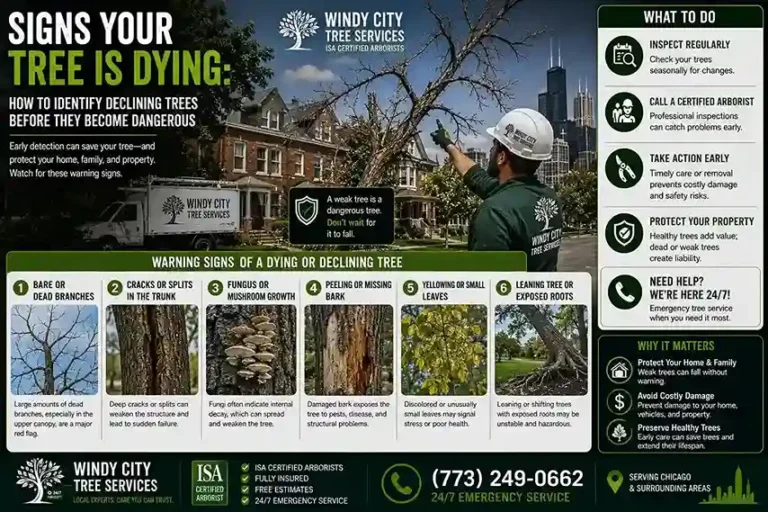
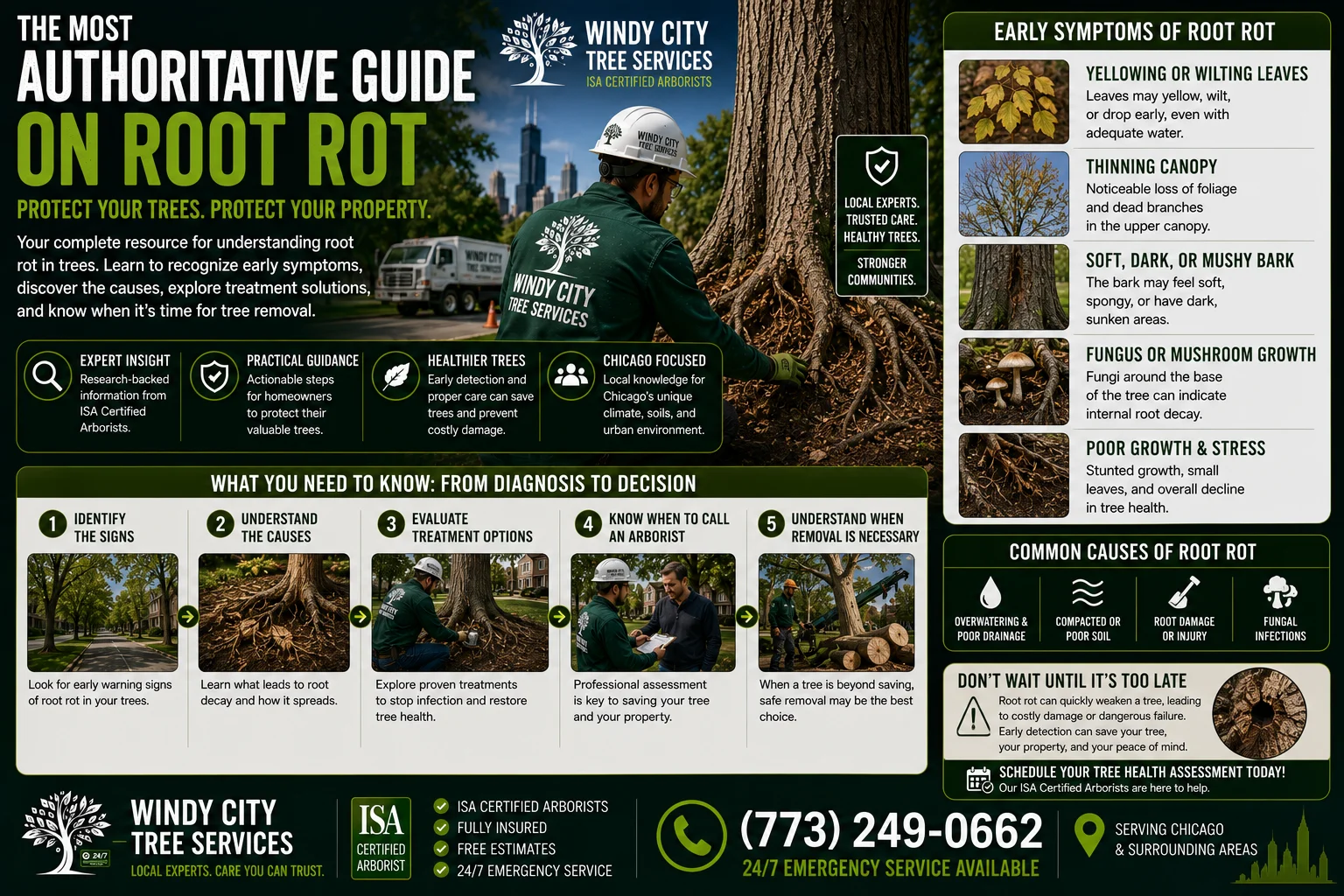
Early root rot symptoms appear above ground as the tree responds to reduced root function. The canopy is the most accessible diagnostic tool a homeowner has, and changes in leaf color, density, and timing are often the first visible evidence of a root problem developing below the soil surface.
Root Rot Progression Timeline
Reduced Canopy Density
Leaves are smaller than normal. The canopy appears thinner than in previous years. New growth at branch tips is noticeably shorter.
Leaf Color Changes
Yellowing (chlorosis) of leaves, particularly between the veins. Some browning at leaf margins, especially during warm weather when the damaged root system can’t keep up with evaporative demand.
Premature Leaf Drop
The tree drops leaves earlier than neighboring trees of the same species. In severe cases, some branches fail to leaf out in spring at all.
Wilting Under Moderate Heat
Leaves wilt during warm, dry periods even when soil moisture is adequate. The damaged root system cannot move water fast enough to meet the canopy’s demand.
Dieback at Branch Tips
Individual branches, then larger sections of the canopy, die back from the tips inward. This progresses over one to several growing seasons.
Mushrooms, Bark Decay, Structural Instability
Fruiting bodies (mushrooms or conks) appear at the base of the trunk. Bark becomes soft and peels away. The tree begins to lean or shows heaving at the root zone. Structural failure risk is now high.
Advanced Root Rot Symptoms
When root rot has progressed into the advanced stages, visible signs become more dramatic and the safety risk to people and property increases significantly. At this point, the tree often cannot be saved and poses a genuine hazard, particularly during high-wind events.
- Mushrooms or conks at the base: Fungal fruiting bodies are one of the most reliable visible indicators of significant internal decay. Mushrooms from Armillaria species appear in clusters at the root flare in fall. Bracket-shaped conks from Ganoderma species are hard, shelf-like structures that can persist for years. Their presence indicates that substantial wood decay is already present.
- Soft, discolored wood: When bark is removed near the base, the underlying wood may be soft, wet, brown, or black rather than the firm cream-colored tissue of healthy wood. This is a direct indicator of internal decay.
- Resinous or discolored sap: Oaks and conifers with root rot often ooze dark, foul-smelling sap from the root collar area. This bleeding is the tree’s response to infection and is a significant diagnostic indicator.
- Leaning or soil heaving: A tree that has begun to lean, or where the soil around the root zone has visibly heaved or cracked, has lost enough root anchorage that failure is a realistic possibility in the next storm event. This is a direct safety emergency requiring immediate professional assessment.
- Hollow trunk: Advanced decay can create hollow sections in the trunk. A tree with a hollow trunk has significantly reduced structural integrity regardless of what the canopy looks like above.
A tree that is leaning, showing heaved soil, or producing mushrooms at its base near a home, driveway, or area where people gather should be assessed by a certified arborist immediately. Do not wait for the next storm to determine whether it poses a risk. Call (773) 249-0662 for a professional tree health inspection.
Common Fungal Root Rot Diseases
Root rot in trees is not a single disease but a category of conditions caused by different pathogens with different biology, host preferences, and management approaches. According to ISA Best Management Practices for Plant Health Care, accurate identification of the specific pathogen is a critical first step in developing any management strategy.
Phytophthora Root Rot
Phytophthora species are technically water molds rather than true fungi, though they behave similarly. They thrive in saturated, poorly drained soils and are highly active in Illinois during wet springs and fall. Phytophthora attacks fine roots and root tissue at the crown, causing root and crown rot that progresses upward into the base of the trunk. Affected bark turns brown or cinnamon-colored, often with a water-soaked appearance at the margins of the lesion. Trees under stress from poor drainage are far more susceptible. According to the University of Illinois Extension, Phytophthora is among the most significant causes of landscape plant mortality in the Midwest.
Armillaria Root Rot (Honey Fungus)
Armillaria species, commonly called honey fungus, are among the most widespread tree pathogens in North America. They spread through soil by growing along root surfaces in fan-shaped mycelial mats beneath the bark, and through rhizomorphs, dark, root-like strands that can travel significant distances through soil from an infected stump or root system to infect neighboring trees. Clusters of honey-colored mushrooms appear at the base of infected trees in late summer and fall. Armillaria can kill trees outright or function as a secondary pathogen, colonizing trees already weakened by drought, construction damage, or other stress. The USDA Forest Service identifies Armillaria as a primary contributor to tree mortality in urban and forest settings throughout the Midwest.
Ganoderma Root and Butt Rot
Ganoderma species produce hard, shelf-like bracket conks at the base of infected trees and are responsible for a white rot that destroys the structural wood of the lower trunk and major roots. A tree with a visible Ganoderma conk has already sustained significant internal decay, often far beyond what external appearance suggests. Because Ganoderma decay is internal and often hidden by an otherwise intact bark surface, trees with conks can appear structurally sound to an untrained eye while actually having severely compromised structural integrity. The Morton Arboretum notes that trees with large, established Ganoderma conks in high-use or high-value locations should receive a formal risk assessment by a qualified arborist.
Worried About Root Rot?
Our ISA-certified arborists provide professional root inspections, Air Spade root collar excavations, tree health evaluations, and customized treatment recommendations throughout Chicago and the surrounding area.
Which Chicago Trees Are Most Susceptible?
Root rot affects a broad range of tree species, but certain trees grown widely in Chicago are more prone to specific fungal pathogens or site conditions that trigger root decline.
Oak Species
Susceptible to Armillaria and Ganoderma, especially after construction stress or drought. Oak wilt can also cause root-to-root fungal spread.
Maple Species
Silver maples are especially prone to root collar decay in wet sites. Phytophthora is common in poorly drained clay soils where maples frequently grow.
Spruce and Pine
Phytophthora root rot is a major cause of decline in Colorado blue spruce, often combined with Rhizosphaera needle cast. White pine is salt-sensitive and root-stressed in urban settings.
Birch
River birch prefers moist sites but is sensitive to soil compaction. Urban birches under heat and drought stress are more susceptible to bronze birch borer and root decline in combination.
Ash (Surviving Trees)
Ash trees already weakened by emerald ash borer are highly susceptible to Armillaria as a secondary pathogen, accelerating structural decline.
Ornamental Trees
Crabapple, serviceberry, and ornamental cherry are susceptible to Phytophthora crown rot in wet sites, particularly when planted too deeply or mulched too heavily.
Elm trees stressed by construction or drought show increased susceptibility to Armillaria root rot as a secondary infection following Dutch elm disease treatment. Linden and hackberry are generally more tolerant of wet soil conditions but are not immune to root rot in prolonged saturation events. Our tree health inspection team assesses the specific species, site, and condition of each tree before recommending any management action.
How Arborists Diagnose Root Rot
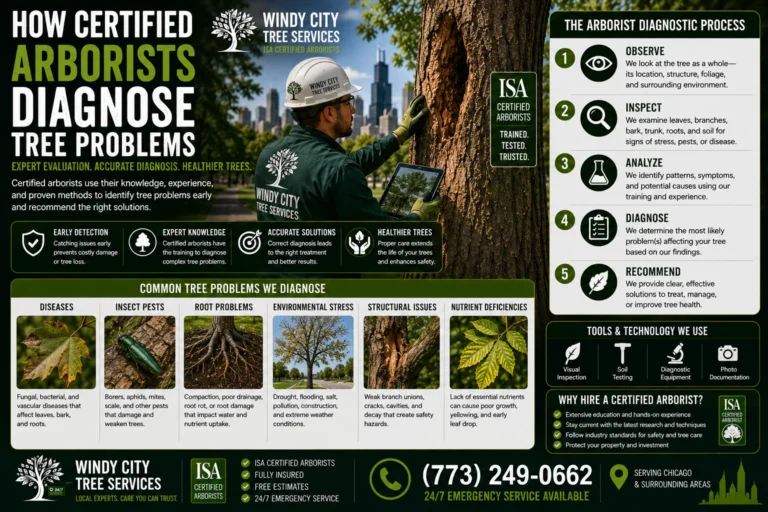
Accurate root rot diagnosis requires a combination of visual observation, physical investigation, and, in some cases, laboratory analysis. A canopy that looks thin or stressed is only the starting point. The root system itself must be examined to determine the actual cause of decline.
Visual Canopy and Crown Assessment
A certified arborist begins by evaluating the canopy for pattern and severity of decline, comparing the affected tree to neighboring trees of the same species, and looking for asymmetries in canopy density that might indicate localized root damage on one side. Crown symptoms that are more pronounced on one side often correlate with root damage from construction, paving, or grade changes on that side.
Root Collar Inspection
The root collar (where the trunk flares out to meet the soil) is one of the most diagnostically important areas on any tree. Many root and crown rot problems begin here, where soil, mulch, or grade changes trap moisture against the bark. An arborist will examine the root flare for discolored bark, soft wood, fungal mycelium, or decay that is invisible until the site is properly examined.
Air Spade Root Excavation
The most definitive diagnostic tool for root problems is Air Spade root excavation. An Air Spade uses a directed stream of compressed air to move soil away from roots without cutting them, exposing the root system for direct visual inspection. This allows the arborist to assess the color, texture, and integrity of roots at various distances from the trunk and confirm whether decay, girdling roots, or physical root damage are present. Air Spade excavation causes no damage to root tissue and leaves the root system entirely intact after the inspection. It is the standard of care recommended by ISA Best Management Practices for root system evaluation in high-value or diagnostic contexts.
Soil Evaluation
Soil texture, drainage rate, compaction, pH, and organic matter content all influence root health and root rot susceptibility. An arborist may evaluate soil drainage at the root zone during the inspection or recommend a formal soil test to identify correctable site conditions. The USDA Natural Resources Conservation Service (NRCS) provides soil classification data for Illinois counties that can help arborists identify site-level drainage constraints.
Fungal Identification and Laboratory Testing
When the specific pathogen needs to be identified for treatment planning or documentation, laboratory analysis may be appropriate. Root samples showing decay can be submitted to plant disease diagnostic laboratories, including those operated by the University of Illinois, for culture and identification. This step is most valuable when the diagnosis is unclear or when a specific management intervention requires pathogen confirmation.
Can Root Rot Be Treated?
Treatment outcomes for root rot depend on how much of the root system has been affected, whether the causal conditions can be corrected, and which pathogen or site condition is driving the problem. Early-stage root rot with correctable site conditions is the most manageable scenario. Advanced decay in a significant portion of the root system is rarely reversible. No treatment can regrow dead roots or reverse structural wood decay that has already occurred.
Avoid anyone who guarantees recovery from root rot. Treatment improves conditions and may slow disease progression, but the outcome depends on factors that cannot be controlled after the fact. Honest guidance from a certified arborist is always preferable to oversold promises.
Site and Soil Improvement
When poor drainage or compacted soil is a primary factor, improving site conditions is the most important intervention. This may involve improving surface grade around the tree to redirect water away from the root zone, installing subsurface drainage, or using Air Spade excavation to decompact the soil and restore oxygen exchange in the root zone without damaging roots. Proper mulching (3 to 4 inches of organic mulch, pulled back from the trunk) improves soil moisture retention and temperature buffering while reducing compaction from foot traffic.
Root Collar Excavation
Exposing a buried root collar using Air Spade allows the bark at the trunk base to dry out and may slow the progression of collar rot caused by chronic moisture contact. Removing excess soil or mulch that has accumulated against the trunk is one of the most consistently beneficial interventions available for trees with early-stage crown rot.
Irrigation Adjustment
For trees on irrigation systems, recalibrating irrigation schedules to apply water less frequently but more deeply encourages deeper root growth and reduces the surface saturation that supports Phytophthora activity. For trees not on irrigation, ensuring that supplemental watering during drought is applied at the drip line rather than directly at the trunk improves the situation.
Fungicide Applications
Phosphonate-based fungicide soil drenches and trunk injections have shown efficacy against Phytophthora in some research contexts and are used by certified arborists in appropriate situations. Fungicides are generally not effective against Armillaria or Ganoderma once those pathogens have established in wood tissue. The Morton Arboretum recommends that fungicide applications for root rot always be part of a broader management plan that includes site correction rather than a standalone intervention.
Protect Your Trees from Hidden Root Problems
Early diagnosis can improve management options, reduce safety risks, and help preserve valuable landscape trees. Contact Windy City Tree Services for a professional tree health evaluation.
When Tree Removal Is Necessary
Not every tree with root rot needs to be removed immediately, but some do. The decision depends on the extent of decay, the tree’s structural integrity, and the consequences of failure if the tree or a large limb comes down. A formal tree risk assessment following ISA and ANSI A300 risk assessment protocols is the appropriate tool for making this determination.
Removal should be strongly considered when any of the following conditions are present:
- The tree has lost more than approximately one-third of its root system to decay or physical damage
- Significant structural wood decay is present in the lower trunk, particularly where Ganoderma conks indicate internal column decay
- The tree has begun to lean, or the soil around the root zone shows heaving or cracking indicating root failure
- The canopy is more than 50 percent dead and the tree shows no response to improved site conditions
- The tree is located where failure would threaten people, structures, or vehicles
- Adjacent trees may be at risk of root-to-root disease spread (Armillaria and some oak wilt situations) that removal would interrupt
Our tree removal team handles safe removal with full rigging and cleanup, and our emergency tree removal crew is available 24/7 when a tree with root rot poses an immediate hazard after a storm event.
Preventing Root Rot
Most of the conditions that lead to root rot are preventable with sound planting and maintenance practices. The following guidelines reflect ANSI A300 standards and ISA Best Management Practices for tree establishment and long-term care.
- Plant at the correct depth. The root flare should be at or slightly above the finished soil grade. Planting too deep is one of the most common causes of root collar decay and long-term tree decline.
- Expose buried root flares. If a tree was planted too deeply or has had soil accumulate against the trunk over time, Air Spade root collar excavation can expose the flare and reverse early collar rot.
- Mulch correctly. Apply 3 to 4 inches of organic mulch in a ring extending to the drip line of the canopy. Keep mulch at least 6 inches back from the trunk. Never pile mulch against the bark.
- Improve drainage before planting. In low-lying or clay-heavy areas, address drainage before installation rather than hoping the tree will adapt. Consider raised planting beds or soil amendments to improve infiltration.
- Water appropriately. Newly planted trees need consistent moisture during establishment but should not be overwatered. Established trees generally do not need supplemental irrigation except during extended drought.
- Protect root zones during construction. Establish root zone protection barriers before any excavation, grading, or heavy equipment operation near trees. Root zone damage from construction is a major cause of subsequent root rot susceptibility.
- Schedule annual inspections. Our tree health inspection service provides documented assessments that catch root problems before they become structural emergencies.
- Use Air Spade for routine root zone care. Periodic Air Spade decompaction near mature trees in high-traffic areas restores oxygen levels in the root zone and is a direct investment in long-term root health.
Structural pruning through our tree trimming and pruning service reduces the wind load a tree must carry and supports long-term stability, which matters more when root systems are under stress. Storm preparation through our storm prep and support systems program addresses structural vulnerabilities before severe weather arrives, including cabling and bracing through tree cabling service for trees with weakened root anchorage.
Comparison Tables
Healthy Roots vs Root Rot
| Characteristic | Healthy Tree | Root Rot |
|---|---|---|
| Root texture | Firm and resilient | Soft, easily crushed |
| Root color | White to tan feeder roots | Brown, black, or water-soaked |
| Trunk stability | Firmly anchored in soil | Leaning or soil heaving present |
| Canopy density | Full, species-appropriate | Thin, sparse, or patchy |
| Bark at base | Firm, intact, healthy color | Soft, discolored, peeling, or decayed |
| Fungi present | No fruiting bodies at base | Mushrooms or conks at root zone |
| Annual growth | Normal twig extension | Significantly reduced or absent |
| Leaf timing | Normal leafout and drop | Premature drop or late leafout |
Root Rot vs Drought Stress
Both conditions cause overlapping canopy symptoms. Professional inspection is the only reliable way to distinguish them.
| Symptom | Root Rot | Drought Stress |
|---|---|---|
| Yellowing leaves | ✓ | ✓ |
| Brown leaf margins | ✓ | ✓ |
| Premature leaf drop | ✓ | ✓ |
| Mushrooms at base | ✓ | ✗ |
| Soft or decayed roots | ✓ | ✗ |
| Wet or saturated soil | ✓ (often) | ✗ |
| Bark decay at base | ✓ | ✗ |
| Improved by watering | ✗ | ✓ |
| Improves after rain | ✗ | ✓ |
| Structural instability | ⚠ Advanced cases | ✗ |
Root Health Inspection Checklist
Use this checklist to evaluate the visible condition of trees on your property. Any item checked should prompt a call to a certified arborist for a professional assessment.
- Inspect the base of each tree for mushrooms, conks, or soft, discolored bark
- Check for mulch or soil piled against the trunk (mulch volcanoes)
- Observe whether the root flare is visible at soil level or buried
- Compare canopy density to previous years and neighboring trees
- Note any premature leaf drop or late leafout in spring
- Check for dead or dieback branches in the upper canopy
- Look for signs of leaning that weren’t present before
- Check whether soil near the base heaves, cracks, or shifts when you push the trunk
- Observe how long water stands in the root zone area after heavy rainfall
- Document any recent nearby construction or grade changes near the tree
- Note any exposed surface roots that may have been damaged by mowing or foot traffic
- Schedule a professional inspection annually for mature trees over 12 inches in trunk diameter
Frequently Asked Questions About Root Rot
What causes root rot in trees?
Root rot is caused by fungal pathogens (most commonly Phytophthora, Armillaria, or Ganoderma), prolonged soil saturation, soil compaction, buried root collars, construction damage, or a combination of these conditions. Poor drainage is one of the most consistent contributing factors in Illinois urban trees.
What does root rot look like on a tree?
Above ground, root rot causes thinning canopy, yellow or brown leaves, premature leaf drop, and branch dieback. At the base of the trunk, you may see mushrooms or bracket conks, soft or discolored bark, and resinous or foul-smelling sap. Advanced cases show trunk leaning and soil heaving around the root zone.
Can root rot be cured?
Root rot cannot be reversed in the sense of regrowing dead roots or eliminating established wood decay. However, early-stage root rot with correctable site conditions (poor drainage, compacted soil, buried root flare) can often be stabilized, and the progression of disease significantly slowed, with appropriate management. Honest professional assessment is essential because outcomes vary widely depending on the extent of damage and the specific pathogen involved.
Are mushrooms at the base of a tree always a sign of root rot?
Not always, but they are always a reason to have the tree inspected by a certified arborist. Mushrooms from Armillaria at the root zone indicate active root decay. Bracket conks from Ganoderma indicate significant internal wood decay. Some saprotrophic mushrooms grow near trees without being parasitic, but there is no reliable way to distinguish these from more serious fungi without professional assessment.
Can overwatering cause root rot?
Yes. Chronic overwatering creates the same oxygen-depleted, saturated soil conditions that poor natural drainage creates. Both situations kill fine roots through suffocation and create conditions that favor Phytophthora and other water-mold pathogens.
Is root rot contagious between trees?
Armillaria spreads through soil via rhizomorphs, root-like fungal strands that can travel from an infected stump or root system to neighboring trees over time. Phytophthora spreads through water movement in soil. Neither is transmitted through the air the way some foliar diseases are, but both can move from tree to tree in appropriate conditions.
Can an arborist save a tree with root rot?
It depends on the stage and extent of the damage. Trees with early-stage root rot and correctable site conditions have the best prognosis. Trees with advanced decay affecting major structural roots or significant portions of the root system may no longer be candidates for preservation regardless of intervention. A professional tree health inspection is the only way to assess the specific situation accurately.
How do you inspect tree roots without digging them up?
Air Spade root excavation uses compressed air to move soil away from roots without cutting or damaging them. This allows a certified arborist to visually inspect the root collar, major structural roots, and the trunk base area for decay, girdling roots, or physical damage. It is a non-destructive technique that leaves the root system intact after the inspection.
What is an Air Spade and why is it used for root rot?
An Air Spade is a pneumatic tool that directs a high-velocity stream of compressed air into the soil to dislodge particles from around tree roots without mechanical cutting. It is used for root collar excavation, soil decompaction, root system investigation near construction, and girdling root identification. It is the preferred diagnostic and treatment tool for root-related tree problems per ISA Best Management Practices.
When should a tree with root rot be removed?
Removal is warranted when the tree has lost a significant portion of its root system, shows structural trunk decay affecting stability, has begun to lean or shows heaving soil, has more than 50 percent dead canopy with no response to treatment, or is located where failure would endanger people or structures. A formal tree risk assessment is the appropriate tool for making this determination. See our tree removal service or contact us for an emergency assessment through our emergency tree removal line.
How do I improve drainage around my trees?
Improving drainage may involve regrading the surface around the tree to direct water away from the trunk, installing subsurface drainage lines in the root zone, using Air Spade to decompact the soil and create vertical air channels, or amending soil with organic matter to improve infiltration over time. The right approach depends on the specific site and the severity of the drainage problem.
Is root rot more common in certain soil types?
Yes. Heavy clay soils like those prevalent across much of the Chicago metropolitan area are particularly prone to supporting root rot conditions because they drain slowly, compact easily, and hold water for extended periods after rainfall or irrigation.
Can a tree grow new roots after root rot damage?
Trees can produce new root growth in healthy soil areas even as damaged areas continue to decline. Supporting new root growth through improved drainage, decompaction, and appropriate fertilization can help a tree compensate for lost root tissue, though this cannot reverse structural decay that has already occurred.
Does root rot spread from dead stumps to healthy trees?
Armillaria is particularly effective at spreading from dead stumps through soil rhizomorphs to adjacent living trees. Grinding or removing stumps promptly after tree removal reduces the reservoir of inoculum available for spread. Our stump grinding service addresses this risk directly.
Should I fertilize a tree with root rot?
Fertilization is not a treatment for root rot and should not be applied aggressively to a severely stressed tree. However, appropriate soil fertility correction as part of a broader management plan can support recovery in trees with early-stage decline, particularly if nutrient deficiency is contributing to the stress. An arborist should assess the specific situation before any fertilization is applied.
How often should mature trees be inspected for root problems?
Annual inspections are recommended for mature trees, particularly those over 12 inches in trunk diameter, those near structures, and those in locations where failure would present a significant risk. Trees in known wet or compacted sites should be inspected more frequently. Our annual tree health inspection program documents root zone condition over time, making changes easier to track and address early.
Can I treat root rot myself?
Homeowners can address some contributing conditions, such as correcting irrigation schedules, removing mulch from against the trunk, and improving surface drainage. However, accurate diagnosis of root rot requires professional tools and training, and treatment decisions should be based on confirmed diagnosis of the specific condition. Applying fungicides or making structural decisions based on an incorrect diagnosis can cause additional harm. Professional assessment is always the appropriate starting point.
What are the risks of not treating a tree with root rot?
An untreated tree with progressive root rot will continue to decline. As structural roots lose integrity, the tree becomes increasingly prone to wind throw during storms. In advanced cases, a tree can fail without warning even in moderate wind conditions. The liability and property damage risks from an unaddressed structural tree failure are significant, and emergency removal after a storm typically costs considerably more than proactive assessment and management.
Key Takeaways
- Root rot develops underground before visible symptoms appear, making early professional inspection essential for trees in at-risk sites.
- Common causes include poor drainage, saturated soil, buried root collars, soil compaction, and fungal pathogens including Phytophthora, Armillaria, and Ganoderma.
- Early symptoms (thin canopy, yellow leaves, premature drop) closely resemble drought stress. Mushrooms or conks at the trunk base, soft bark, and trunk instability indicate advanced stages.
- Air Spade root excavation is the most effective and least damaging method for direct root system inspection. It is the standard of care for root diagnosis recommended by ISA Best Management Practices.
- Treatment focuses on correcting contributing site conditions. Fungicides have limited efficacy against established wood-decay fungi like Armillaria and Ganoderma.
- Trees with extensive root decay or structural instability pose a genuine safety risk and should receive a formal risk assessment. Removal may be the only appropriate action in advanced cases.
- Prevention through correct planting depth, proper mulching, drainage improvement, root zone protection during construction, and annual inspections significantly reduces root rot risk.
Related Articles
Expert Root Health and Tree Care in Chicago
Healthy roots are the foundation of healthy trees. Windy City Tree Services provides root health inspections, Air Spade root collar excavations, soil improvement, tree disease diagnosis, preventive maintenance, tree preservation, and safe tree removal when necessary.