
Tree Service in New Eastside Chicago
Engineering-aware arborist care for elevated plazas, Illinois Center towers, and the lakefront streetscape — where standard tree work isn’t enough.
A Neighborhood Built from the Ground Up — Literally
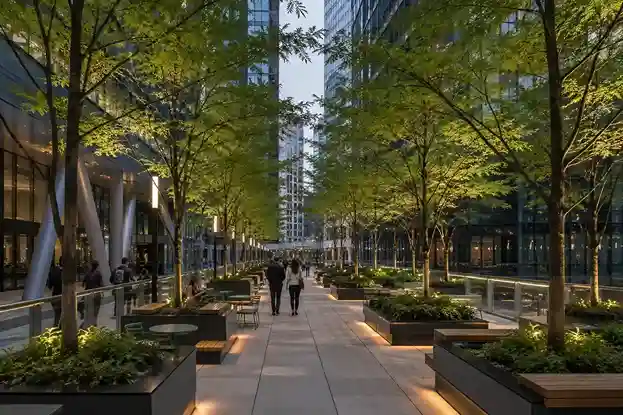
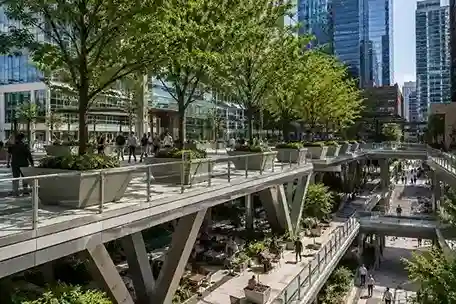
New Eastside is one of Chicago’s most distinctive urban environments. The neighborhood developed largely from the 1970s onward on land reclaimed from old rail yards east of Michigan Avenue, through the Illinois Center project and later expansions. The result is a vertical neighborhood where high-rise residential and office towers share space with a multi-level pedestrian infrastructure that includes elevated walkways and plazas sitting above street grade — and in several cases, above parking structures below.
That layered physical structure is exactly why tree care here is different. Many trees in New Eastside aren’t planted in the ground at all — they sit in engineered soil beds built into elevated plaza decks, each with its own drainage profile, soil volume, and root-depth constraint. Managing these trees well means understanding what’s beneath the planting bed, not just what’s above it.
Windy City Tree Services brings the same engineering-aware approach we use in neighboring Lakeshore East to New Eastside’s plaza plantings, along with standard ground-level care for the neighborhood’s street-facing trees. We work with residential towers, Illinois Center’s office properties, and the shared plaza spaces managed under coordinated property agreements throughout the area.
Weather & Site Conditions That Affect New Eastside Trees
Sitting near the mouth of the Chicago River and the lakefront, New Eastside’s trees face a combination of environmental pressures that most Chicago neighborhoods don’t.
River Mouth Wind Exposure
New Eastside sits where the Chicago River meets Lake Michigan, creating meaningful and consistent wind pressure — similar to Streeterville but compounded by the open lakefront exposure directly to the east.
Limited Root Depth in Planting Beds
Elevated plaza trees can’t anchor the way ground-level trees do. Shallower engineered soil beds reduce wind resistance and make proper cabling and structural support especially important for larger specimens.
Winter & Salt Exposure
Snow removal on elevated plaza decks requires coordination with tree health planning to avoid mechanical damage to planters and salt contamination of the limited soil volume below.
Summer Irrigation Dependency
Plaza-level trees have no access to natural groundwater. During dry summer stretches, irrigation system performance directly determines whether trees thrive or decline — making routine health inspections especially valuable here.
Storm Season Wind Risk
The combination of lake-driven storms and shallow planting beds creates elevated wind risk compared to inland neighborhoods. Our storm preparation services are particularly relevant for New Eastside’s exposed plaza plantings.
Drainage & Soil Volume Constraints
Engineered planting beds must drain correctly to avoid root rot while retaining enough moisture to prevent drought stress. When drainage underperforms, tree health deteriorates quickly in ways that aren’t always obvious from above.
Species Suited to Elevated & Constrained Planting
New Eastside’s trees weren’t chosen at random. The species used here are specifically selected for their tolerance of the conditions that define this neighborhood.
The workhorse of Chicago’s urban streetscape, honey locust performs exceptionally well in constrained soil conditions, making it a natural fit for both ground-level cutouts and elevated plaza beds throughout New Eastside and Illinois Center. Its open canopy structure also reduces wind load, an important consideration in this exposed location. Routine pruning keeps the structure sound and the canopy balanced.
Increasingly used in newer plaza-level plantings across downtown Chicago, Kentucky coffeetree brings strong drought tolerance and an unusual branching structure that holds up well in exposed, wind-prone sites. It’s a slower-establishing tree, so new plantings benefit from careful fertilization and irrigation monitoring during the first several growing seasons.
Used in some of the larger Illinois Center plaza spaces that offer deeper planting beds, London plane tree can reach a significant size and provides meaningful shade cover. Larger specimens in elevated beds require periodic structural assessment to evaluate root anchoring and overall wind load, particularly before storm season.
Many of New Eastside’s elevated planter installations use smaller ornamental species where soil depth is limited — ornamental grasses, compact conifers, serviceberry, and similar selections that don’t demand the root volume a full-sized tree requires. These plantings still benefit from periodic health reviews and fertilization, particularly when irrigation systems underperform.
What We Do in New Eastside
We offer the full range of tree care services throughout New Eastside, with particular experience in the elevated and structural planting environments that define the neighborhood.
Tree Removal
Safe removal of dead, damaged, or hazardous trees in ground-level and elevated planting environments, with careful coordination around plaza infrastructure.
Learn more →Emergency Tree Removal
24/7 response to storm-damaged, fallen, or dangerously leaning trees anywhere in New Eastside, including along Lake Shore Drive and the river mouth.
Learn more →Tree Trimming & Pruning
Wind-aware pruning that reduces sail area in elevated, exposed sites without compromising tree health or long-term canopy structure.
Learn more →Tree Health Inspection
Structural assessments for elevated plaza trees that include irrigation performance, soil volume review, and root anchoring evaluation.
Learn more →Commercial Tree Service
Documented, scheduled care programs for Illinois Center properties, HOAs, and other commercial accounts requiring recurring maintenance and written reporting.
Learn more →Storm Prep & Support Systems
Pre-season wind-load reduction, cabling for vulnerable specimens, and risk documentation for property managers before storm season arrives.
Learn more →Tree & Shrub Fertilization
Nutrient programs for trees in limited-volume planting beds that can’t rely on surrounding soil for replenishment.
Learn more →Tree Cabling & Bracing
Supplemental structural support for multi-stemmed trees and specimens with limited root anchoring in elevated planting beds.
Learn more →Stump Grinding & Removal
Stump removal on plaza decking with extra care to protect waterproofing membranes and drainage systems below the surface.
Learn more →Every Property Type in New Eastside
From single-tower accounts to coordinated multi-building plaza management, we work across the full range of New Eastside’s property landscape.
Finding New Eastside
New Eastside sits at the eastern edge of the Loop, near the mouth of the Chicago River and the lakefront.
From Millennium Park: Head east on Randolph or Wacker Drive toward the neighborhood — it’s the cluster of towers just east of Michigan Avenue.
From Navy Pier: Head south on Lake Shore Drive, then turn west toward the river mouth. New Eastside begins just before the river crossing.
From Union Station: Head east on Wacker Drive across the river. Illinois Center and the New Eastside towers are visible ahead.
From Lake Shore Drive: Exit west at Randolph Street or Wacker Drive and head toward the high-rise towers east of Michigan Avenue.
From I-90 / I-94: Exit toward downtown and continue east toward Michigan Avenue. New Eastside is the vertical neighborhood directly east of Millennium Park.
We Serve the Surrounding Area Too
New Eastside is part of our downtown Chicago service area. We serve the neighborhoods around it with the same level of care.
New Eastside Tree Care — FAQ
Questions we hear regularly from New Eastside property managers, building residents, and facilities teams.
Let’s Take Care of Your Trees
Whether you need routine maintenance, emergency tree removal, or expert advice on New Eastside’s elevated planting environments, we’re ready to help.