
Tree Service in Lakeshore East Chicago
Lakeshore East is one of the more unusual tree-care environments in downtown Chicago — a planned community built around a park that sits directly on top of a parking structure. That changes how trees here need to be planted, watered, and maintained.
Windy City Tree Services works with the residential towers, park management, and developers throughout Lakeshore East, with hands-on experience in the rooftop and structural-deck planting conditions that define this neighborhood.
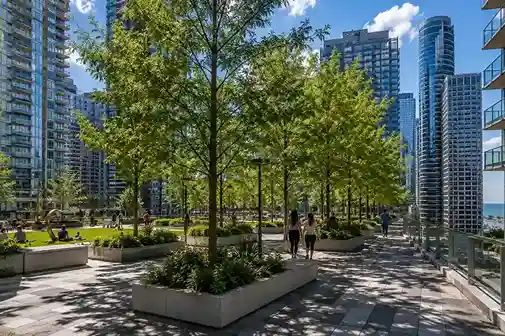
A park engineered from the ground up — literally
Lakeshore East was developed starting in the early 2000s on land that had sat largely undeveloped for decades despite its prime location near the mouth of the Chicago River. The centerpiece is Lakeshore East Park, a landscaped green space built directly on top of a below-grade parking garage, ringed by high-rise residential towers including the distinctive, rippling Aqua Tower.
Because the park’s green space sits on structural decking rather than natural ground, tree planting here required careful engineering from the start: limited soil depth, built-in drainage systems, and species chosen specifically for their ability to thrive in a contained root environment.
What’s actually under the park
A simplified look at how a structural-deck planting bed is built — and why soil depth, drainage, and root barriers matter more here than in a typical downtown yard.
Simplified illustration for reference — actual engineered planting details vary by planting bed.
Weather Impact on Lakeshore East Trees
Lakeshore East sits close to the lake and the mouth of the Chicago River, giving it real wind exposure similar to Streeterville and New Eastside — but with the added complication that many trees here grow in shallower, engineered soil beds over structural decking rather than natural ground. That limits how deep roots can go to anchor against wind, making proper staking and root zone management even more important than in neighborhoods with natural soil depth.
Winter brings heavy snow-load considerations for the structural deck itself, along with the usual salt exposure on surrounding streets. Spring and summer growing seasons require careful irrigation monitoring, since trees on structural decking don’t have access to the groundwater reserves a tree in natural soil would. Storm season is a genuine concern given the wind exposure combined with the shallower root systems typical of deck-planted trees — see our storm prep for trees services.
Common Trees in Lakeshore East
Honey Locust
A common choice for structural planting beds due to its tolerance of shallower soil volumes.
Kentucky Coffeetree
Increasingly used in engineered planting areas for its durability.
Ornamental Species & Shrubs
Used throughout Lakeshore East Park’s landscaped areas, requiring more intensive irrigation monitoring than natural-ground plantings.
London Plane Tree
Used in some of the park’s larger planting beds where soil volume allows for bigger canopy trees.
Maintenance in Lakeshore East often involves closer monitoring of irrigation and drainage systems in addition to standard pruning and health care, since a tree growing over a parking structure doesn’t have the same margin for error as one in natural ground — learn more about our tree health inspection services.
Property Types in Lakeshore East
High-Rise Residential Towers
Including landmark buildings like Aqua Tower.
Structural Deck Park & Green Space
Maintained under a specific engineered landscape plan.
Retail & Amenity Spaces
Integrated into the base of several residential towers.
Property Management Offices
Overseeing the coordinated maintenance of the shared park space.
Local Landmarks & Green Space
Lakeshore East is best known for Aqua Tower, one of the most architecturally distinctive buildings in Chicago, and Lakeshore East Park itself — a rare example of a substantial green space built entirely over a parking structure in a dense urban core.
The park is the neighborhood’s defining feature, offering a landscaped, family-friendly green space in the middle of a high-rise district. Because it sits on structural decking, the park’s tree and plant health depends heavily on engineered drainage and irrigation systems working correctly, which makes routine inspection especially important here.
Driving Directions to Lakeshore East
- From Navy Pier: head south on Lake Shore Drive, then west into Lakeshore East.
- From Millennium Park: head east on Randolph or Lake Street toward the neighborhood.
- From Union Station: head east on Wacker Drive toward the river mouth.
- From Lake Shore Drive: exit west at Randolph Street or Wacker Drive into Lakeshore East.
- From I-90/I-94: exit toward downtown and continue east to reach the neighborhood.
How We Can Help
- Tree Removal Chicago
- Tree Trimming Chicago
- Tree Health Inspection Chicago
- Tree Fertilization Chicago
- Commercial Tree Service Chicago
- Storm Prep for Trees Chicago
- Emergency Tree Removal
- Stump Grinding & Removal
- Tree Cabling & Bracing
- Air Spade Services
- Land Clearing
- View All Services
Lakeshore East is closely connected to New Eastside and Streeterville, both part of our downtown service area.
Why Choose Windy City Tree Services in Lakeshore East
We understand the specific engineering constraints of a park built over a parking structure, and we approach irrigation, drainage, and root zone management with that context in mind rather than treating every planting bed like natural ground.
Lakeshore East Tree Care FAQ
Is Lakeshore East Park really built on top of a parking garage?
Yes, much of the park and its landscaping sits on a structural deck above below-grade parking, which is why soil depth and drainage engineering are especially important for tree health here.
Does that mean trees here need different care than trees in natural ground?
Yes, trees planted over structural decking generally need closer monitoring of irrigation, drainage, and root zone conditions since they don’t have access to natural groundwater reserves.
Can large trees really grow successfully on a parking structure?
Yes, with the right engineered soil depth and species selection, but it does require more active management than a tree growing in unrestricted natural soil.
Do you coordinate with the park’s property management for tree care?
Yes, we work with property management and homeowners’ associations that oversee Lakeshore East Park’s shared green space.
What happens if a drainage system under the park fails?
It can lead to waterlogged or overly dry planting beds depending on the failure, both of which stress tree roots. Early detection through routine inspection helps prevent lasting damage.
Do you offer irrigation monitoring as part of tree health care?
Yes, we assess irrigation and drainage performance as part of our tree health inspections for structural-deck planting sites.
What tree species are best suited to Lakeshore East’s engineered planting beds?
Honey locust and Kentucky coffeetree are both well suited to the shallower soil volumes typical of structural deck plantings.
Do you handle emergency response for storm-damaged trees in the park?
Yes, we provide 24/7 emergency response and coordinate with property management for work in the shared park space.
How does wind affect trees planted over a parking structure?
Shallower root systems have less anchoring capacity than trees in natural, deep soil, which makes proper staking and wind-aware structural pruning especially important.
Do you work with residential tower HOAs on maintenance contracts?
Yes, we set up recurring inspection and care schedules for HOAs and property managers throughout Lakeshore East.
Can tree roots damage the parking structure below the park?
It’s a valid concern, which is why root barriers and engineered planting beds are designed into the park’s structure from the start. Regular inspection helps catch any developing issues early.
Do you provide tree health inspections for insurance or HOA budgeting purposes?
Yes, we provide written assessments that HOAs and property managers can use for budgeting, insurance, or long-term planning purposes.
What’s the biggest tree care challenge in Lakeshore East?
Balancing irrigation and drainage for trees growing over a structural deck is the single biggest ongoing challenge, more so than any pest or disease issue common elsewhere downtown.
Do you offer fertilization programs tailored to engineered soil beds?
Yes, we adjust fertilization programs to account for the more limited soil volume and different nutrient dynamics of structural planting beds.
Is stump grinding available for trees planted in structural decking?
Yes, though we take extra care to avoid damaging the deck’s waterproofing or drainage layers during the grinding process.
Let’s Take Care of Your Trees
Whether you need routine maintenance, emergency tree removal, or expert advice, Windy City Tree Services is ready to help — anywhere in Lakeshore East.