
Tree Service in South Loop Chicago
Windy City Tree Services works throughout South Loop, from the historic rowhomes near Prairie Avenue to the newer high-rises around Roosevelt Road. Routine pruning, emergency response, and everything between.
Response
South Loop’s Changing Tree Canopy
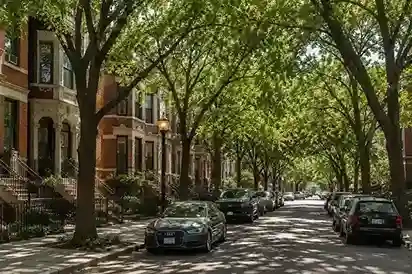
South Loop has changed more in the last thirty years than almost any other downtown neighborhood, and its trees tell that story. Where old rail yards once sat empty south of the river, you’ll now find townhomes, mid-rise condo buildings, and family-friendly blocks with a tree canopy that’s still relatively young compared to the century-old parkway trees further north.
The neighborhood’s transformation began in the 1970s and 1980s with the Dearborn Park development, built on former Illinois Central rail yards, and has continued with condo and apartment construction stretching south toward Cermak Road. The neighborhood mixes converted industrial buildings, new-construction high-rises, and pockets of genuinely historic architecture, including the Prairie Avenue Historic District, once home to some of Chicago’s wealthiest 19th-century families.
Because so much of South Loop was built or redeveloped within the last few decades, its street trees skew younger than in older downtown neighborhoods. That means more active establishment care, staking adjustments, and monitoring for transplant stress, and generally less of the mature-tree structural work common further north. Our tree health inspection service is especially useful for newer plantings that haven’t been assessed since installation.
We handle everything from routine pruning on a young parkway tree to emergency response after storm damage near the Museum Campus. Whether you need a one-time visit or ongoing seasonal maintenance, our arborists are familiar with South Loop’s specific mix of property types and growing conditions.
How Chicago’s Weather Affects South Loop Trees
South Loop’s location near the lake creates specific stressors that shape the care its trees need season by season.
Winter Salt & Snow
South Loop’s wide arterial streets, including Roosevelt Road and Michigan Avenue, see heavy salting each winter. Salt spray and soil salt accumulation stress roots over time, especially on newer plantings without deep establishment.
Lakefront Wind Exposure
Blocks closest to Lake Shore Drive and the Museum Campus face real wind exposure. Young trees without full root establishment are more vulnerable to being uprooted or developing a lean after strong storms.
Summer Heat & Drought
South Loop has more open sky than the Loop’s tighter street canyons, which is generally good for growth, but it also means summer heat and drought stress hit hard without afternoon shade. Young trees in exposed spots need consistent watering support.
Spring Frost Risk
Late spring frost can damage young trees that haven’t fully hardened off yet. This is a greater concern here than in neighborhoods with older, more established canopy that buffers temperature swings.
Common Trees in South Loop
South Loop’s newer streetscape plantings favor species that tolerate disturbed urban soil and open sun exposure.
Honey Locust
The most widely planted tree along newer residential streets. Tolerates young, disturbed soil well and handles salt spray better than most species. Needs structural pruning in early years.
Kentucky Coffeetree
A common choice in recent streetscape plantings near Roosevelt Road. Tough, adaptable, and increasingly popular for urban settings. Wide branch attachments make it a low-maintenance option when planted in the right location.
Elm (Resistant Cultivars)
Found on some of the older blocks near Prairie Avenue. Disease-resistant elm cultivars like Princeton and Valley Forge bring classic canopy without the Dutch elm disease risk that devastated earlier generations of elms.
Linden
Planted near some of the mid-rise residential buildings. Lindens have a reliable structure and good urban tolerance, but are prone to aphid infestations that cause honeydew drip. Annual monitoring matters for sidewalk-adjacent specimens.
Ornamental Pear
Common in newer condo landscaping for its spring bloom and tidy shape. Structurally weak over time, particularly at narrow-angle branch unions, and vulnerable in storms. Many South Loop ornamental pears will eventually need cabling support or removal.
Because so many South Loop trees are still young, a large share of our work here involves establishment pruning, staking adjustments, and monitoring for transplant stress rather than mature-tree removal. Our fertilization programs and air spade soil work support healthy root development in the compacted soils common to newer developments.
Property Types We Work With
South Loop’s mix of historic and new-construction properties calls for different approaches on almost every block.
South Loop Landmarks & Green Space
South Loop’s proximity to major parks and civic landmarks shapes how we think about tree care in the neighborhood.
Museum Campus
The Field Museum, Shedd Aquarium, and Adler Planetarium border the neighborhood’s eastern edge. Trees on Museum Campus land are managed by the park district separately from private property.
Soldier Field
Directly adjacent to Museum Campus. Event traffic affects access timing for nearby properties, and we plan South Loop jobs around the stadium schedule when needed.
Grant Park
Grant Park’s southern reaches fall within South Loop’s boundaries. Residents benefit from the green space, but high foot traffic puts pressure on root zones near pathways.
Prairie Avenue District
The historic district’s rowhomes and mansions contain some of the oldest trees in South Loop. Preservation, structural support, and careful pruning are the priorities on these properties.
Ping Tom Memorial Park
At the edge of nearby Chinatown, this park anchors South Loop’s southwestern boundary. Residents in the blocks between use our services for both private trees and permit-coordinated parkway work.
Dearborn Park
Built on former Illinois Central rail yards, Dearborn Park’s trees are among the older post-industrial plantings in the neighborhood, now reaching an age where structural pruning and health monitoring are timely.
Tree Services Available in South Loop
Our full service lineup is available throughout South Loop for both residential and commercial properties.
Tree Removal
Safe, controlled removal of dead, diseased, or hazardous trees. We work around shared courtyards, alley constraints, and neighboring structures.
Tree Removal Service →Tree Trimming & Pruning
ANSI A300-compliant pruning for young establishment trees and mature canopy alike. Structural training for South Loop’s newer plantings is a specialty.
Tree Trimming Service →Emergency Tree Removal
24/7 response for storm-damaged, fallen, or dangerously leaning trees throughout South Loop. Call any time, day or night.
Emergency Service →Tree Health Inspection
Ideal for newly planted South Loop trees showing transplant stress, and for older trees near Prairie Avenue where early detection prevents bigger problems.
Health Inspection →Tree Fertilization
Soil nutrient programs that support healthy establishment for younger trees in the disturbed urban soils common to South Loop’s newer developments.
Fertilization Programs →Stump Grinding
Compact equipment suited to the smaller rear yards and shared alley access common in South Loop townhomes and rowhomes.
Stump Grinding →Cabling & Bracing
Recommended for mature trees we want to preserve rather than remove, particularly older trees in the Prairie Avenue Historic District.
Cabling & Bracing →Storm Prep & Support
Pre-season pruning, structural assessment, and cabling to reduce storm damage risk on South Loop’s more exposed lakefront-adjacent blocks.
Storm Prep →Commercial Tree Service
Full-scope tree care for South Loop condo associations, HOAs, property management firms, and institutional clients with insurance documentation available.
Commercial Service →Driving Directions to South Loop
We know the neighborhood well. Here’s how our crews and your estimate appointments reach South Loop from the surrounding area.
From Union Station: Head south on Canal or Clark Street toward Roosevelt Road.
From Willis Tower: Head south on Wells or LaSalle into the South Loop.
From Lake Shore Drive: Exit west at Roosevelt Road or Cermak Road into the neighborhood.
From I-90/I-94: Exit at Roosevelt Road and head east toward Michigan Avenue.
From Soldier Field: Head north on Michigan Avenue or Indiana Avenue into South Loop.
Why South Loop Property Owners Choose Us
We understand that South Loop’s newer canopy needs a different kind of attention than a century-old parkway tree further north. Our arborists focus on establishment care, structural training while trees are young, and catching transplant stress early, alongside the emergency and removal services every downtown neighborhood eventually needs.
For condo associations and property management firms, we provide the insurance documentation, crew coordination, and on-site communication that commercial clients require. We’ve worked with HOAs throughout South Loop and understand how to schedule around building access, parking restrictions, and event conflicts near the Museum Campus and Soldier Field.
For homeowners in Dearborn Park, Prairie Avenue, and the townhome blocks throughout the neighborhood, we bring the same standard: honest assessment, ANSI A300-compliant work, and complete cleanup when we’re done. Most of our South Loop clients find us through a neighbor’s recommendation, and that’s the way we prefer it.
Learn more about our full service range at windycitytreeservices.com/services/ or contact us to talk through what your trees need.
Frequently Asked Questions: Tree Service in South Loop
Much of South Loop was redeveloped from former rail yards starting in the 1970s and 1980s, so the tree canopy is generally younger than in older downtown neighborhoods with century-old plantings. Dearborn Park, built on former Illinois Central rail yard land, is a good example, where even its oldest trees are relatively recent compared to those in established North Side neighborhoods.
Yes. Young trees typically need staking, consistent watering during establishment, and structural pruning to guide healthy growth. Mature trees are more commonly managed for canopy health, hazard reduction, and clearance maintenance. Getting structural pruning right early prevents expensive corrective work later on.
Generally yes. Trees planted in the strip between the sidewalk and the street are owned and maintained by the City of Chicago’s Bureau of Forestry. Private work on parkway trees typically requires a city permit. We can advise you on the permit process and coordinate where needed.
Yes, we regularly work on mature trees around the Prairie Avenue Historic District’s rowhomes and mansions. Preserving existing canopy is often a priority on these properties, and we lean toward structural support, careful pruning, and monitoring over removal whenever a tree can be saved.
Yes. Young trees without full root establishment are more vulnerable to wind exposure, particularly in blocks close to Lake Shore Drive and the Museum Campus. Proper staking during the first two to three years, combined with structural pruning to reduce wind load, significantly lowers the risk.
Yes. We assess newly planted trees for transplant stress, staking problems, root collar defects, and early disease or pest activity. Catching issues early in a new planting saves the tree and avoids the cost of replacing it a year or two down the road.
Transplant stress and staking problems on younger trees are the most frequent issues we see. Improperly installed or left-too-long stakes can girdle a young tree’s trunk. Storm damage risk in the more exposed blocks near the lakefront is also a consistent concern, especially for ornamental pears and younger honey locusts.
Yes. We offer 24/7 emergency response throughout South Loop for downed limbs and storm-damaged trees. Call (773) 249-0662 any time. For more about our emergency services, visit our emergency tree removal page.
Yes. We regularly coordinate with condo associations and property managers for work in shared courtyards and common areas. We handle access scheduling, notify neighboring residents when needed, and use rigging techniques to control branch placement in tight spaces.
Yes. We offer soil and nutrient programs designed to support healthy establishment in young or recently transplanted trees. Compacted urban soils in newer developments often lack the organic matter and microbial activity that trees need, and targeted fertilization can make a real difference in early growth rates.
Work on private property near these landmarks doesn’t typically require a special permit. Trees on Museum Campus or Chicago Park District land are managed separately and require district authorization. We advise you on any requirements specific to your property before starting any job.
Yes. We use compact equipment suited to the smaller yards and shared alley access common in South Loop townhomes. Before grinding, we identify utility locations to avoid conflicts, which matters especially in newer developments where utility lines may run close to the surface.
Honey locust and Kentucky coffeetree both perform well in South Loop’s more open exposure. Both tolerate full sun, urban soil compaction, and drought stress once established. For property owners looking to add trees, these are reliable choices for the neighborhood’s conditions.
Yes. Cabling and bracing are common recommendations for mature trees we want to preserve rather than remove, particularly in the Prairie Avenue Historic District where older trees have significant character value. Our cabling and bracing service uses industry-standard hardware and installation methods.
Yes. We offer wood chip supply and firewood from trees removed during our South Loop jobs. Let us know before work begins if you’d like material kept rather than hauled away.
Let’s Take Care of Your Trees
Whether you need routine maintenance, emergency tree removal, or expert advice on your South Loop property, Windy City Tree Services is ready to help.
Explore the Downtown Chicago hub or view all Chicago neighborhoods we serve.