
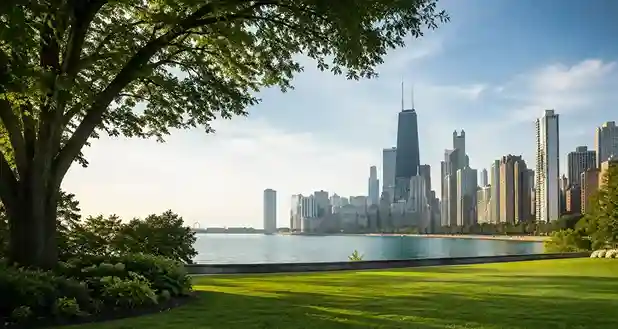
Tree Service in Lincoln Park Chicago
Lincoln Park’s century-old oaks, stately maples, and canopy-forming elms deserve skilled, thoughtful care. Local arborists serving residential and commercial properties throughout one of the North Side’s most beautiful neighborhoods.
Where Historic Architecture Meets a Mature Urban Forest
Lincoln Park is one of Chicago’s most beloved neighborhoods, and its mature urban forest is a significant part of what makes it feel that way. Block after block of greystones and Victorian homes sit beneath canopy-forming oaks and maples that have been growing here for eighty to a hundred years or more. These trees are genuine assets — they contribute to property values, reduce summer cooling costs, and define the neighborhood’s character. Caring for them well requires more than a saw and a truck; it takes an understanding of how old trees in compressed urban environments actually work.
The neighborhood takes its name from the lakefront park that borders it to the east, and that relationship with green space shapes the entire community’s attitude toward trees. Residents here tend to know and value their trees, which means they notice when something looks wrong — a yellowing canopy, a leaning trunk, a limb that didn’t leaf out this spring. A significant part of our work in Lincoln Park involves health assessments for property owners who spotted something concerning and wanted a professional evaluation before making any decisions.
Lincoln Park’s housing stock runs the full range — single-family brownstones and greystones, large vintage apartment buildings, and newer condominiums along the lakefront corridor near Oz Park. Each presents different tree care challenges. A greystone with a 90-year-old oak in the backyard has very different needs than a condo building managing parkway trees along Clark Street. We handle both ends of that spectrum and everything in between. Whether you need routine pruning, a full tree removal, or emergency response after storm damage, our team brings the same level of care to every Lincoln Park job.
Get a Free Estimate in Lincoln Park
Call or message us to schedule a free on-site estimate anywhere in Lincoln Park.
(773) 249-0662 info@windycitytreeservices.com Request Free EstimateNearby Neighborhoods
How Lincoln Park’s Climate Affects Its Trees
Lincoln Park sits close enough to Lake Michigan that lake-effect winds are a constant factor, particularly in the fall and early spring when storms move through rapidly. Trees on the eastern blocks closest to the lakefront experience noticeably more wind stress than those deeper in the neighborhood. This matters for structural pruning decisions — trees in exposed positions benefit from more conservative crown management to reduce the sail area the wind pushes against.
Winter in Lincoln Park brings heavy snow and occasional ice storms, and the neighborhood’s large parkway trees — many with full, spreading canopies — can accumulate significant ice weight before homeowners realize there’s a structural problem. The combination of ice loading and wind gusts is one of the most common causes of major limb failures in otherwise healthy trees. We recommend pre-season storm preparation for any tree with structural concerns, particularly older oaks and silver maples on the neighborhood’s residential streets.
Summer brings extended dry periods that stress parkway trees in compacted soil, which is why deep root fertilization makes such a meaningful difference for trees along Lincoln Park’s more heavily trafficked streets. Fall is often the best window for structural pruning — the tree is winding down, wounds seal cleanly, and the full branch architecture becomes visible once leaves drop.
Trees We Work With in Lincoln Park
Magnificent specimens throughout the neighborhood. Many have reached 80+ years and need periodic structural assessment.
Fast-growing and common in yards; prone to weak branch attachments that benefit from cabling on mature specimens.
The dominant parkway tree throughout Lincoln Park; tolerates confined soil and road salt effectively.
Surviving elms are prized here; they need regular monitoring given ongoing Dutch elm disease pressure.
Common in larger yards; fragrant, long-lived, and relatively low maintenance once established.
Widely used in front yards for spring color; benefits from annual pruning to maintain shape and airflow.
Tree Care for Every Lincoln Park Property
Lincoln Park’s housing is dominated by single-family greystones, Victorian-era homes, and converted vintage buildings — many on 25-foot-wide lots where trees grow in both the front parkway and private rear yards. The tight lot widths mean trees often grow close to neighboring structures, utility lines, and each other. That requires careful attention to crown clearances and structural balance during any pruning or assessment work.
The neighborhood’s larger apartment buildings and condo associations along the lakefront and on major streets need a different approach — their trees are often in higher-visibility, higher-liability positions, and commercial tree care programs with scheduled maintenance and documented inspections are the right fit. We work with property managers throughout Lincoln Park on exactly this kind of structured ongoing care.
Oz Park and the blocks surrounding it have some of the neighborhood’s finest residential tree specimens — older oaks and maples that have had room to develop full, spreading canopies. These trees are worth significant investment to maintain, and a proper assessment every few years is money well spent compared to the cost of losing one to a preventable structural failure.
Lincoln Park’s Green Infrastructure
Lincoln Park itself — over 1,200 acres of lakefront parkland stretching from North Avenue to Foster Avenue — is the neighborhood’s defining green space. The park contains an extraordinary collection of mature trees maintained by the Chicago Park District, and the private trees along the park’s western edge often have canopies that intermingle with the park’s plantings.
Oz Park, located in the neighborhood’s interior, is a beloved community green space anchored by mature trees. The Conservatory grounds near Fullerton and Stockton feature some of the most botanically interesting plantings in the neighborhood. Proximity to all of this managed green space creates a beneficial microclimate for private trees throughout Lincoln Park.
Nearby landmarks like the Lincoln Park Zoo and the Peggy Notebaert Nature Museum add to the ecological richness of the area, and the lakefront trail provides a continuous green corridor that benefits the entire neighborhood’s tree canopy health.
Tree Services Available in Lincoln Park
Every service we offer is available throughout Lincoln Park — from routine trimming to complex removals and 24/7 storm response.
Tree Removal
Safe removal of dead, diseased, or structurally compromised trees in tight Lincoln Park lots.
Learn More →Emergency Tree Removal
24/7 storm response and fallen tree removal anywhere in Lincoln Park.
Learn More →Tree Trimming & Pruning
Seasonal pruning and crown management for Lincoln Park’s mature oaks, maples, and elms.
Learn More →Stump Grinding
Complete stump removal from parkways, backyards, and commercial properties throughout Lincoln Park.
Learn More →Tree Health Inspection
Certified arborist assessments for Lincoln Park trees showing decline, stress, or structural concerns.
Learn More →Deep Root Fertilization
Targeted nutrient delivery for Lincoln Park parkway trees in compacted, nutrient-depleted soil.
Learn More →Tree Cabling & Bracing
Structural support for Lincoln Park’s multi-stemmed oaks and wind-exposed trees near the lake.
Learn More →Storm Prep & Support
Pre-season wind-load reduction and risk assessment before Lincoln Park storm season.
Learn More →Commercial Tree Service
Scheduled maintenance and documentation for Lincoln Park apartment buildings and condo associations.
Learn More →Why Lincoln Park Homeowners Choose Windy City
Experienced with Tight Urban Lots
We know Lincoln Park’s 25-foot lots and how to work safely around neighboring structures, utility lines, and historic masonry.
Licensed & Fully Insured
Full general liability and workers’ compensation on every job. Certificates available before we start.
Honest About What Trees Need
We don’t recommend removal when trimming will do. Our arborists give straight advice, not upsells.
24/7 Emergency Response
Storm damage doesn’t wait. We’re available around the clock for Lincoln Park emergencies.
Complete Cleanup
Every job ends with a thorough cleanup — no wood, branches, or chips left on your property.
Free Written Estimates
No surprises. You get a written quote before we touch a single branch.
Directions to Lincoln Park
From Lake Shore Drive: Exit at Fullerton Avenue, North Avenue, or Diversey Parkway and head west into the neighborhood.
From I-90/94: Exit at Fullerton Avenue and head east toward Clark Street and the Lincoln Park interior.
From Western Avenue: Head east on Fullerton, Diversey, or Belmont to reach Lincoln Park from the west side.
From Downtown Chicago: Take Lake Shore Drive north or Clark Street north directly into the neighborhood.
Lincoln Park Tree Service Questions
Need Tree Service in Lincoln Park?
Free estimates, certified arborists, and 24/7 emergency response throughout Lincoln Park and the surrounding North Side.
Part of our Chicago-wide service network. See all tree services we offer.