
Tree Service in West Pullman, Chicago
Certified arborists serving West Pullman with safe tree removal, professional trimming, 24/7 emergency storm response, and full residential, commercial, and industrial tree care.
The Neighborhood We Serve
About West Pullman
West Pullman occupies Chicago’s Far South Side, roughly bounded by 103rd Street to the north, 115th Street to the south, Halsted Street to the east, and Ashland Avenue to the west. It sits just west of the historic Pullman neighborhood and shares the Far South Chicago geography with Roseland, South Deering, and Calumet Heights, making it one of the more removed parts of the city from the downtown core but also one with a strong residential identity and a long industrial history.
The neighborhood developed alongside the industrial expansion of Chicago’s Far South Side in the late nineteenth and early twentieth centuries, with residential blocks built to house workers employed in nearby manufacturing, rail yards, and the broader industrial complex that defined the region. The result is a compact, residential neighborhood with the classic Chicago bungalow and brick two-flat housing stock that defines so much of the South and Far South Sides, interspersed with churches, schools, commercial storefronts along Halsted Street and Vincennes Avenue, and industrial parcels along the neighborhood’s edges.
West Pullman Park, along with nearby Palmer Park, serves as the neighborhood’s primary green anchor. Both parks draw residents from West Pullman and surrounding communities and support the kind of community activity that healthy urban parks make possible. Gwendolyn Brooks College Preparatory Academy on the neighborhood’s eastern edge represents a significant institutional presence that shapes the character of the surrounding blocks.
Like much of Chicago’s Far South Side, West Pullman has been working through revitalization challenges that include property vacancy and disinvestment alongside active community investment efforts. Maintaining and improving the neighborhood’s urban tree canopy is part of that revitalization. Healthy, well-maintained trees on residential blocks, commercial corridors, and near public institutions improve property values, reduce urban heat, and signal the kind of sustained care that makes neighborhoods safer and more appealing over time.
Windy City Tree Services brings professional tree care to West Pullman as part of our broader Far South Chicago tree service coverage. View our full Chicago service areas to see all neighborhoods we cover.
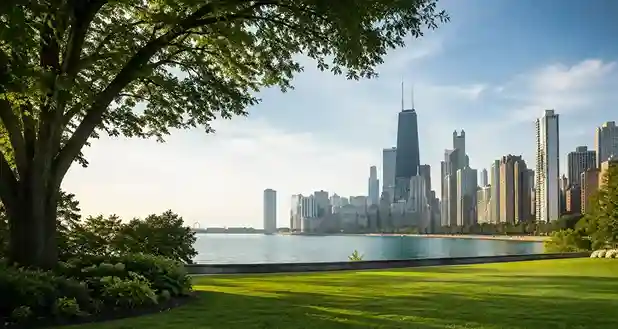

West Pullman Urban Forest
West Pullman Trees and Urban Forestry
West Pullman’s residential blocks, parkways, and park spaces carry a meaningful urban tree canopy that improves daily life in measurable ways when it’s well maintained.
Mature oaks, maples, elms, hackberries, and ash trees are spread throughout West Pullman’s residential interior, planted over decades in private yards and along parkway strips on the neighborhood’s quieter blocks. These trees collectively reduce the urban heat island effect that concentrates in the neighborhood during Chicago’s hot summers, intercept stormwater before it reaches overwhelmed sewer systems, and improve air quality in an area that sits in proximity to the industrial activity of the Far South Side.
Trees in parkways along 115th Street, Halsted Street, Vincennes Avenue, and Ashland Avenue face the full suite of urban stressors: compacted soil, salt runoff from winter maintenance, heat reflection from pavement, and limited root space. These conditions make regular tree health inspections and deep root fertilization particularly valuable for maintaining the health of West Pullman’s parkway canopy over time.
Properties along the edges of West Pullman Park and Palmer Park often have trees that benefit from the slightly better soil drainage and reduced impervious surface coverage near the parks. These park-adjacent trees can grow larger and live longer than their counterparts on dense residential blocks, which makes their preservation even more valuable when redevelopment or renovation projects occur nearby.
During any construction or site improvement project in West Pullman, tree preservation planning is an important step that is often overlooked. Construction compaction, grade changes, and utility work near root zones can silently damage trees that appear healthy for years before the impact shows up visibly. We offer pre-construction assessments and protective measures as part of our broader tree care services.
- Mature oaks and maples in private yards throughout the residential interior
- Parkway trees on Halsted Street, Vincennes Avenue, and 115th Street
- Trees in and adjacent to West Pullman Park and Palmer Park
- Landscape trees on church, school, and institutional grounds
- Commercial corridor trees along neighborhood shopping areas
- Industrial perimeter trees and buffer plantings
Specialized Urban Forestry Services
Tree Issue in West Pullman? We Are Ready to Help.
Free written estimates for residential, commercial, and industrial tree work throughout West Pullman and the Far South Side.
Climate and Tree Care
West Pullman Weather and Tree Health
Chicago’s Far South Side gets the same punishing weather patterns as the rest of the city, and West Pullman’s mix of older trees and urban soils makes preventive maintenance the most effective long-term strategy.
Heavy snow accumulation and ice storms stress tree branches, exposing structural weaknesses that were not obvious before. Trees with included bark, co-dominant stems, or existing cracks are most vulnerable. Late-winter pruning removes the deadwood most likely to fail before the season ends.
Winter street maintenance on Halsted Street, 115th Street, and Vincennes Avenue introduces road salt into the soil around parkway and residential trees. Salt accumulation restricts water uptake and damages fine root systems over time. Our Air Spade and deep root fertilization services directly address salt-stressed root zones.
Spring storms arrive early in Chicago, bringing high straight-line winds that stress trees still carrying winter structural damage. A post-winter inspection before full leaf-out identifies which trees need immediate attention before the storm season’s most dangerous weather arrives.
West Pullman’s compacted urban soils and industrial adjacency amplify summer heat stress on trees. Drought periods reduce soil moisture faster in constrained root zones. The Far South Side sits in the path of periodic derecho events, which can cause widespread tree damage across the neighborhood in a single weather event.
Fall storms arriving while trees still carry full leaf loads put maximum mechanical stress on the canopy. Trees that were not structurally pruned during dormancy are most at risk during this window. Our storm preparation service addresses these risks before severe weather arrives.
Routine inspections and structural pruning on a consistent schedule catch developing problems before they become emergency calls. Emergency tree removal after a failure typically costs two to three times more than the same tree’s preventive care would have over several seasons, with added risk of property damage.
Local Tree Canopy
Common Tree Species in West Pullman
West Pullman’s residential blocks, parkways, and park spaces support a mix of long-established native species and urban-adapted varieties, each with specific care needs.
Emerald Ash Borer has severely impacted ash trees throughout Chicago, including West Pullman. Untreated ash trees are at high risk of failure. Our tree health inspection covers EAB assessment, treatment options, and removal planning when a tree is beyond saving.
A rapidly fatal fungal disease that spreads through root grafts and sap beetles. Never prune oaks from April through July. If you notice wilting or premature browning on an oak during summer, contact us for an inspection immediately. The disease can spread to neighboring trees through root connections.
A vascular fungal disease spread by elm bark beetles. Surviving elms in West Pullman need regular health monitoring. Early detection and treatment can sometimes save affected trees, but rapid response is critical. Contact us at the first sign of branch wilting or yellowing on an elm.
Decades of urban use compact West Pullman soils, restricting root development and water uptake. Girdling roots that grow around a tree’s base restrict the flow of nutrients and can eventually kill even a healthy-looking tree. Our Air Spade service diagnoses and treats both issues without damaging surrounding roots.
Who We Serve
Property Types We Serve in West Pullman
West Pullman’s property mix spans residential, commercial, and industrial uses, each with its own tree care requirements and risk profile.
Residential
- Single-family bungalows and ranch homes
- Two-flats and three-flats
- Apartment buildings and rental properties
- Condominiums
- Park-adjacent residential properties
- Properties near Gwendolyn Brooks College Prep
Commercial and Institutional
- Shopping centers and retail corridors along Halsted Street
- Churches and religious institutions
- Schools and educational facilities
- Medical offices and clinics
- Commercial buildings and storefronts
- Property management companies
Industrial and Specialized
- Warehouses and distribution facilities
- Manufacturing and industrial properties
- Vacant lots and redevelopment parcels
- Properties along the Bishop Ford Freeway corridor
- Sites near the Metra Electric Line right-of-way
- Industrial buffer zone tree management
Parks and Green Spaces
West Pullman Parks and Community Green Spaces
Two Chicago Park District facilities anchor West Pullman’s green space network, and the trees within and around them play a central role in the neighborhood’s ecological health.
West Pullman Park
West Pullman Park runs along 119th Street and provides the neighborhood’s primary outdoor recreation space, with athletic fields, a field house, walking paths, and established tree plantings throughout the grounds. The park’s mature trees contribute shade to the athletic areas during warm months and provide a visual green buffer for the surrounding residential blocks. Trees on private properties adjacent to the park benefit from the park’s slightly better soil and drainage conditions, and often grow larger than similar trees in more constrained yard settings. We work on private property along the park perimeter, with park trees themselves managed by the Chicago Park District.
Palmer Park
Palmer Park serves the broader Far South Side community from its location near 111th Street, drawing residents from West Pullman, Roseland, and surrounding neighborhoods. Its tree canopy includes mature plantings that provide important shade and habitat in an area where dense residential development limits the amount of uninterrupted green space. Properties near Palmer Park face similar dynamics to those near West Pullman Park: trees that have grown in a more favorable microenvironment but may carry structural issues that developed over decades without consistent professional attention. Our tree health inspection service is a good starting point for any mature tree on a park-adjacent property.
Neighborhood Streetscape Trees
Beyond the parks, West Pullman’s streetscape trees along 115th Street, Halsted Street, Ashland Avenue, and Vincennes Avenue form a linear green network that connects the neighborhood’s residential blocks. These parkway trees are city property, but their condition directly affects the properties beside them. When a parkway tree develops a hazard or becomes diseased, we help property owners understand their options and coordinate with city forestry resources where appropriate. Our storm preparation service covers risk assessment for both private yard trees and proximity planning around city parkway trees.
Urban Forestry and Stormwater
The tree canopy throughout West Pullman contributes measurably to the neighborhood’s stormwater management. Mature trees intercept rainfall before it reaches the ground, reducing the volume of water entering Chicago’s combined sewer system during storm events. Root systems absorb soil moisture and reduce runoff from residential and commercial surfaces. As trees are lost to age, disease, or development without replacement, this stormwater function degrades. We support long-term canopy health through fertilization, structural care, and root zone treatment that keeps existing trees healthy and productive for as long as possible.
What We Offer
Tree Services Available in West Pullman
Every service we offer is available throughout West Pullman for residential, commercial, and industrial property owners.
Tree Removal
Safe removal of dead, hazardous, or unwanted trees on West Pullman residential, commercial, and industrial properties. Full debris cleanup included.
Tree removal details →Emergency Tree Removal
24/7 emergency response for storm damage, fallen trees, and hanging limbs throughout West Pullman. Residential, commercial, and industrial sites.
Emergency response details →Tree Trimming and Pruning
Structural and clearance pruning following ANSI A300 standards for West Pullman residential yards, parkway trees, and commercial properties.
Trimming and pruning details →Stump Grinding
Below-grade stump removal for yards, commercial sites, and industrial parcels throughout West Pullman. All chips and debris removed.
Stump grinding details →Tree Cabling and Bracing
Structural support systems for mature oaks, maples, and elms with co-dominant stems or weak unions in West Pullman residential and park-adjacent properties.
Cabling and bracing details →Tree Health Inspection
Professional assessments for Emerald Ash Borer, Oak Wilt, Dutch Elm Disease, root girdling, decay, and structural defects throughout West Pullman.
Health inspection details →Tree and Shrub Fertilization
Deep root fertilization that counteracts compacted soils and road salt damage common throughout West Pullman’s parkway and residential trees.
Fertilization details →Air Spade Root Care
Compressed-air root excavation for diagnosing compaction, girdling roots, and root collar disease without damaging existing root systems.
Air Spade details →Land Clearing
Site clearing for redevelopment, new construction, and vacant parcel preparation on West Pullman commercial and industrial sites.
Land clearing details →Commercial Tree Service
Scheduled programs, risk assessments, and maintenance contracts for West Pullman businesses, churches, schools, warehouses, and industrial properties.
Commercial service details →Storm Prep and Support Systems
Pre-season structural inspections and cabling work to reduce storm damage risk on West Pullman properties before Chicago’s most severe weather arrives.
Storm prep details →Firewood and Wood Chips
Firewood delivery and wood chip supply available from West Pullman tree projects, useful for landscaping, garden beds, and composting.
Firewood and chip details →Why Windy City Tree Services
Why West Pullman Property Owners Choose Us
We bring ISA-trained expertise and honest recommendations to every job in West Pullman, whether it is a single backyard tree or a full industrial site clearance.
ISA-Certified Arborists
Expert arboricultural knowledge behind every assessment and recommendation for West Pullman properties.
Licensed and Insured
Full liability and workers’ compensation coverage on every residential, commercial, and industrial job in West Pullman.
24/7 Emergency Response
Storm damage and hazardous trees do not wait. We respond around the clock throughout West Pullman and the Far South Side.
Honest Recommendations
We tell you what the tree actually needs. Removal is not always the answer, and we say so when it is not.
Modern Equipment
Aerial lifts, cranes, and precision rigging for complex removals near West Pullman homes and industrial structures.
Complete Cleanup
Every job site is left clean. No debris, chips, or sawdust left behind on your property or the street.
Commercial and Industrial Expertise
Scheduled programs, risk assessments, and documentation for West Pullman businesses, warehouses, and institutions.
Far South Chicago Expertise
We know the soil conditions, species challenges, and storm patterns of West Pullman and the Far South Side from direct working experience.
Free Estimates
Written on-site estimates at no charge. You know the full cost before any work begins in West Pullman.
Surrounding Areas
Nearby Neighborhoods We Also Serve
West Pullman borders several Far South Chicago neighborhoods that are part of our service area. If you are in a nearby community, we cover you as well.
Getting to West Pullman
Driving Directions
West Pullman is accessible from several major expressways and arterials on Chicago’s Far South Side. Here is how to reach the neighborhood from common starting points.
- From I-94 (Bishop Ford)Take the Bishop Ford Freeway southbound and exit at 111th Street or 115th Street. Head west on either street into West Pullman. The I-94 corridor forms the neighborhood’s eastern edge.
- From I-57Exit at 111th Street and head east toward Halsted Street, or use Vincennes Avenue to approach the neighborhood from the southwest.
- From Halsted StreetHalsted Street runs north to south along the eastern side of West Pullman. Head south on Halsted from Roseland or south suburbs to reach the neighborhood directly.
- From Ashland AvenueAshland Avenue forms the western boundary of West Pullman. Head south on Ashland from the broader South Side to reach the neighborhood’s western edge.
- From Vincennes AvenueVincennes Avenue runs diagonally through the Far South Side and provides a direct route into West Pullman from the northwest. Turn south onto Halsted or a numbered street at 111th to 115th to enter the neighborhood.
- From 115th Street115th Street is the neighborhood’s southern boundary. Approach from the east via the I-94 corridor or from the west via Ashland Avenue and travel east or west along 115th to reach your destination.
- From West Pullman ParkWest Pullman Park is located along 119th Street. Head north from 119th Street on Halsted or a nearby residential street to reach the rest of the neighborhood.
- From Gwendolyn BrooksGwendolyn Brooks College Preparatory Academy is located on the neighborhood’s eastern edge near Halsted Street. Use Halsted Street or a numbered cross street to navigate to other parts of West Pullman from the school.
Common Questions
Frequently Asked Questions
Questions West Pullman homeowners, landlords, businesses, and industrial property managers ask us most often.
Let’s Take Care of Your Trees in West Pullman
Whether you need routine trimming, a hazard tree removed, emergency storm response, or a full industrial site clearance, Windy City Tree Services is ready to help throughout West Pullman and the Far South Side.
Explore Far South Chicago tree services or view all Chicago service areas.