
Professional Tree Trimming & Pruning in Chicago
Healthier Trees. Safer Properties. Better Curb Appeal.
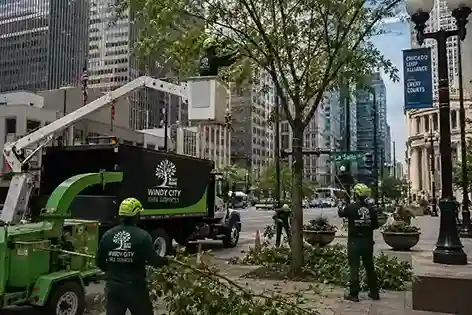
Proper pruning does more than keep trees looking neat. It removes hazardous limbs, improves structure, promotes healthy growth, and adds real value to your property — when it’s done right.
Chicagoland
What Proper Tree Trimming Actually Does
Trees in Chicago deal with a lot. Heavy snow loads in winter, severe thunderstorms in summer, drought stress, urban soil compaction, and salt spray from winter road treatment all take a toll. A well-pruned tree handles those stresses better than one that’s been left to grow however it wants.
Regular trimming keeps dead wood out of the canopy before a storm sends it through a window. It improves air circulation so fungal diseases can’t take hold as easily. It removes branches that have started to rub or crowd each other — a problem that creates entry points for insects and rot.
Beyond health and safety, there’s a practical property value angle. Mature trees in good condition can add 10 to 20 percent to a home’s appraised value, according to research from the USDA Forest Service. But the same trees in poor shape — with broken limbs, overgrown crowns, or signs of disease — become liabilities.
Our tree care services are built around what’s best for the tree and safest for your property, not just what’s fastest or easiest for us.
Our Tree Trimming & Pruning Services
Every pruning job is different. We match the right technique to each tree’s species, age, condition, and your specific goals.
Tree Trimming
Selective removal of branches to improve the tree’s shape, reduce weight, and maintain safe clearances around structures, walkways, and utilities.
Tree Pruning
Health-focused branch removal targeting dead, diseased, crossing, and structurally weak wood. Our approach follows ANSI A300 pruning standards.
Crown Cleaning
Removes dead, dying, diseased, and weakly attached branches from throughout the canopy, improving tree health and reducing fall risk.
Crown Thinning
Selective removal of interior branches to reduce density. Improves wind resistance and lets more light reach the ground without changing the tree’s overall height or shape.
Crown Reduction
Reduces the height or spread of a tree by cutting back to strong lateral branches. Maintains the natural form while reducing loading on the structure and stress on the root system.
Crown Raising
Removes lower branches to increase clearance over roads, driveways, sidewalks, and buildings. Done gradually to avoid over-stressing the tree.
Deadwood Removal
Dead branches are the most immediate fall hazard in any tree. We remove them cleanly to eliminate risk, prevent decay from spreading, and improve the tree’s appearance.
Structural Pruning
Trains trees to develop strong framework branches. Most valuable on young and mid-age trees, this work prevents structural defects that would require expensive intervention later.
Young Tree Training
Early pruning establishes a strong central leader and well-spaced scaffold branches. A couple of hours of work on a young tree can prevent thousands of dollars in corrective pruning later.
Ornamental Tree Pruning
Japanese maples, flowering crabapples, serviceberries, and other ornamental species need careful pruning that respects their natural habit. We enhance their form, not force them into artificial shapes.
Seasonal Maintenance
Scheduled visits timed to each tree’s species and local conditions. Keeps your trees looking their best year-round without emergency calls.
Hazard Limb Removal
Broken, split, or hanging limbs need to come down quickly. We handle hazard limb removal safely, often the same day for urgent situations. Also see our emergency tree removal service.
Why Trees Need Regular Care
Trees are not maintenance-free. Here’s what proper pruning prevents and what it promotes.
Removes Dead Branches
Dead wood is the most common cause of storm damage. It falls without warning and adds real liability to your property.
Reduces Storm Damage
A thinned canopy creates less wind resistance. Reducing dense crowns before a storm can mean the difference between a sound tree and a fallen one.
Improves Light & Air
Opening the canopy lets sunlight reach the lower branches and lawn. Better airflow means lower humidity inside the crown and less disease pressure.
Stops Disease Spread
Removing diseased branches before the pathogen spreads is one of the most effective ways to save a tree that would otherwise decline further.
Encourages Healthy Growth
The tree redirects energy from dead and crowded branches to vigorous new growth where the canopy is strongest.
Maintains Clearances
Branches growing over roofs, into gutters, or near utility lines need management before they cause damage or create code violations.
Improves Tree Shape
Regular pruning develops a balanced, visually appealing crown structure that fits the tree’s natural habit and your property’s scale.
Enhances Curb Appeal
Well-maintained trees are an asset. Neglected ones read as deferred maintenance to buyers and neighbors alike.
We Follow ANSI A300 Pruning Standards
ANSI A300 is the American National Standard for tree care operations — the benchmark used by professional arborists across the country. Every cut our crew makes follows these guidelines.
-
1Proper Pruning CutsEach cut is made just outside the branch collar — the swollen tissue at the base of the branch — to trigger the fastest possible wound closure.
-
2Branch Collar PreservationLeaving the collar intact is critical. Cutting flush to the trunk removes the wound wood that seals the cut and opens the door to decay.
-
3No Tree ToppingTopping — cutting back large branches to stubs — causes decay, triggers weak regrowth, and often kills the tree within years. We never do it.
-
4Right-Sized RemovalsWe limit removal to what the tree can recover from. Removing more than 25–30 percent of the canopy at once stresses even healthy trees.
-
5Seasonal TimingCuts are timed to each species and the time of year to minimize disease pressure and stress. Some species require specific windows — oaks, for example, should not be pruned in summer.
What This Means for Your Trees
Following ANSI A300 standards is not a marketing claim — it’s the difference between a pruning job that helps a tree and one that harms it. Trees pruned correctly close their wounds faster, resist disease better, and maintain structural integrity longer.
When you hire Windy City Tree Services, you get pruning that follows the same standards used by municipal forestry departments and landscape architects across Chicago.
If your tree has underlying health concerns beyond pruning, our tree health inspection and treatment service can diagnose and address those issues directly.
Our Tree Trimming Process
From the first call to final cleanup, here’s what to expect when you work with us.
Tree Inspection
We assess tree health, structure, and any hazards before touching it.
Free Estimate
You receive a clear, itemized quote with no hidden charges.
Pruning Plan
We define the objective: crown clean, thin, reduce, or structural work.
Safe Setup
Climbing gear, aerial lifts, and ground protection are staged properly.
Precision Trimming
Each cut follows ANSI A300 standards for correct placement and size.
Complete Cleanup
All branches, leaves, and wood debris hauled away completely.
Final Walkthrough
We review the work with you and answer any questions before leaving.
Residential & Commercial Tree Trimming
Residential Tree Trimming Chicago
Whether you have a single oak in the backyard or a dozen mature trees across your property, we provide the same care and precision. Homeowners in Chicago come to us for trimming large shade trees, pruning fruit trees for better production, shaping ornamental trees in front yards, and removing hazardous limbs before storm season.
We’re careful with your lawn, landscaping, and hardscaping throughout. When we leave, the only evidence we were there is cleaner, healthier trees.
Commercial Tree Trimming Chicago
Commercial properties carry more liability when trees are in poor shape. We work with property managers, HOAs, municipalities, schools, retail centers, industrial facilities, and apartment communities throughout the Chicago area.
We carry full commercial liability insurance and can provide certificates on request. Our crews are experienced working around high-traffic areas, parking lots, and occupied buildings with minimal disruption to your operations. For larger scopes, see our dedicated commercial tree service page.
Seasonal Tree Trimming in Chicago
Chicago’s four-season climate affects when and how trees should be pruned. Timing matters more than most people realize.
Winter Pruning
Late winter (February–March) is the best window for most trees. The tree is dormant, insects are inactive, and the branch structure is fully visible without foliage. Wounds close fast when growth resumes in spring. Best for oaks, elms, and most hardwoods.
Spring Pruning
Light corrective pruning after leaf-out helps shape spring-flowering trees once blooms finish. Good timing for fruit trees, crabapples, and serviceberries. Avoid heavy pruning once new growth is actively extending — it stresses the tree at a high-energy time of year.
Summer Pruning
Summer is appropriate for deadwood removal, hazard limb clearance, and corrective trimming. Avoid oak trees entirely from April through July due to oak wilt risk. Summer pruning is slower-wound-closing but acceptable for most other species when safety demands it.
Fall Pruning
Early fall is generally avoided for major pruning — decay fungi spread spores heavily and wound closure slows as the tree prepares for dormancy. Hazardous branch removal is always appropriate regardless of season. Light deadwood cleanup is fine in fall as well.
Tree Trimming vs. Tree Removal: Which Does Your Tree Need?
Most trees can be managed with pruning. Here’s how we think about the decision.
| Situation | Trimming Appropriate? | Removal Needed? | Notes |
|---|---|---|---|
| Dead branches in otherwise healthy tree | ✔ Yes | ✘ No | Deadwood removal restores safety without losing the tree |
| Overgrown canopy near structures | ✔ Yes | ✘ No | Crown reduction or raising provides clearance |
| Storm-damaged limbs on sound trunk | ✔ Usually | ✘ Rarely | Structural assessment determines extent of damage |
| Disease in outer canopy, healthy interior | ✔ Yes | ✘ No | Remove affected branches and treat if indicated |
| Tree is dead throughout entire canopy | ✘ No | ✔ Yes | Dead trees present immediate fall hazard |
| Severe decay through main trunk or major scaffold limbs | ✘ No | ✔ Yes | Structural failure risk is too high to manage with pruning alone |
| Root system severely compromised | ✘ No | ✔ Yes | Roots provide anchoring; compromised roots mean the whole tree can topple |
| Tree leaning dangerously after storm | ✘ No | ✔ Yes | Cabling may stabilize minor leans; severe leans require removal |
| Young tree with poor structure | ✔ Yes | ✘ No | Early structural pruning prevents future problems |
Not sure which situation applies to your tree? Our arborists will give you an honest assessment at no charge. If removal is the right answer, see our tree removal service or stump grinding pages for next steps. For trees with structural weakness that don’t yet need removal, cabling and bracing may be an option.
Tree Problems We Address with Pruning
These are the conditions we see most often in Chicago yards and commercial properties.
Why Chicago Property Owners Choose Us
We’ve been caring for trees in Chicago neighborhoods for over two decades. Here’s what that experience translates to on your property.
Experienced Arborists
Our team includes trained arborists who understand Chicago’s native and ornamental species — and the unique stresses of the urban environment.
ANSI A300 Compliance
Every cut follows industry-recognized standards. No topping. No flush cuts. No guesswork about where branches come off.
Modern Equipment
Aerial lifts, wood chippers, and proper climbing gear mean we can reach difficult trees safely without unnecessary damage to your property.
Safety-First Approach
Every job starts with a hazard assessment. We don’t rush, and we use proper rigging to direct limbs away from structures, fences, and landscaping.
Fully Insured
General liability and workers’ compensation insurance protects you. Never hire a tree service that can’t provide proof of insurance.
Residential & Commercial
One backyard tree or a 50-tree commercial property — we have the crew size and equipment to handle both with the same quality standard.
Transparent Pricing
Free estimates before any work begins. No surprise add-ons, no pressure to approve additional scope on the day of the job.
Complete Cleanup
We chip or haul everything. When we leave, your property is clean. You don’t have to deal with brush piles, wood debris, or leaf cleanup.
Chicago Local Knowledge
We know Chicago’s neighborhoods, soil conditions, common tree species, and the permit requirements that apply to protected trees on public parkways.
Customer-Focused
We show up when we say we will, communicate clearly about the work, and stand behind the results. Most of our business comes from repeat customers and referrals.
Frequently Asked Questions About Tree Trimming in Chicago
Most mature shade trees benefit from trimming every 3 to 5 years. Young trees and faster-growing species may need attention every 1 to 2 years. Fruit trees typically need annual pruning. The right schedule depends on species, age, location, and what you’re trying to accomplish — our arborists can help you figure this out during the free estimate.
Late winter — roughly February through early April — is the ideal window for most trees in the Chicago area. The tree is dormant, insects that spread disease are inactive, and wounds close quickly once spring growth kicks in. That said, hazardous branches and dead wood should be removed any time they’re identified.
Yes — significantly. Removing dead, diseased, or crowded branches lets the tree redirect resources to vigorous growth. Better airflow through the canopy reduces the conditions that fungal diseases need to spread. And removing structural problems early prevents decay from entering the trunk, which would eventually threaten the whole tree.
Yes. Complete cleanup is included in every job. We chip smaller material on-site and haul away everything else. If you want to keep larger wood sections for firewood, just let us know beforehand.
We handle trimming around utility lines using proper safety protocols. Some situations involving direct contact with high-voltage lines require coordination with ComEd or the utility company. We assess the specific situation and advise you on the right path — which sometimes includes having the utility de-energize the line before we work.
Pricing depends on tree size, number of trees, access, and the scope of work. A small ornamental tree might cost $150–$300. A large mature oak near a structure can run $800–$1,500 or more. We provide free on-site estimates so you get an accurate price for your specific trees before you commit to anything.
Proper pruning does not damage a healthy tree. Our arborists cut just outside the branch collar using clean, sharp tools — the cut that heals fastest and leaves the smallest wound. The practices that damage trees are topping, flush cuts, lion’s-tailing, and removing too much canopy at once. We don’t do any of those.
Yes — ornamental pruning is one of our strengths. We work with Japanese maples, crabapples, serviceberries, dogwoods, redbud, and other ornamental species common in Chicago yards. Our goal is to enhance the tree’s natural form and encourage a balanced structure, not force it into an artificial shape it will constantly try to grow out of.
Yes. We serve HOAs, property management firms, municipalities, schools, apartment communities, retail centers, and industrial properties throughout Chicago and the surrounding suburbs. We carry commercial liability coverage, can work within your maintenance schedule, and provide documentation for property management records.
Yes. Free estimates for all residential and commercial work. Call us at (773) 249-0662 or use the contact form on our contact page to schedule a time. We’ll come out, assess your trees, and give you a clear price before any work is approved.
Crown reduction cuts branches back to living lateral branches of appropriate size, maintaining the tree’s natural structure and wound-closing ability. Topping cuts large branches to stubs with no lateral, leaving massive wounds that can’t close properly, triggering decay, and causing rapid, weak regrowth. We never top trees — it’s harmful and unnecessary.
Oak trees should not be pruned between April and July in the Chicago area. The oak wilt fungus (Bretziella fagacearum) spreads readily through fresh wounds during this period via sap beetles. Elm trees should also be pruned in winter to reduce Dutch elm disease risk. If you have an oak that needs emergency work in summer, we can apply wound sealant immediately after cutting to reduce risk.
For trees on private property in Chicago, a permit is generally not required for routine trimming. However, trees on the public parkway (the strip between the sidewalk and the street) are owned by the city and require permits for removal. Trimming parkway trees may also require city coordination. We advise you on any permit requirements specific to your property before the job starts.
If the trunk is structurally sound and the root system is healthy, trimming is almost always the right choice. Removal becomes necessary when the tree is completely dead, when decay has penetrated the main trunk or major scaffold limbs, or when structural damage has left no viable recovery path. Our arborists give you an honest assessment — we never push removal when trimming will do the job.
Yes. Fruit trees — apple, cherry, pear, plum, peach — need annual pruning to produce well and stay manageable. We prune for open centers or modified central leaders depending on species, removing crowded and crossing wood and managing overall tree size. Late winter before bud break is the right window for most fruit trees here.
Tree Trimming Service Areas Around Chicago
We provide professional tree trimming and pruning throughout Chicago and the surrounding Chicagoland communities.
From our location on W Carroll Ave in Chicago’s West Side, our crews reach every Chicago neighborhood including Lincoln Park, Wicker Park, Logan Square, Hyde Park, Beverly, Pilsen, Bridgeport, Old Town, Lakeview, and Rogers Park. We also serve the North Shore, West Suburbs, and South Suburbs.
Not sure if we serve your area? Call (773) 249-0662 and we’ll confirm quickly.
Need Professional Tree Trimming in Chicago?
Get a free estimate from Chicago’s trusted tree care team. We’ll assess your trees, explain what they need, and give you a clear price — no pressure, no surprises.